


Create Your Own AI Girlfriend 😈
Chat with AI Luvr's today or make your own! Receive images, audio messages, and much more! 🔥
4.5 stars


The whole fantasy of a body swap experience is built on one simple, powerful idea: getting to see the world through someone else's eyes. This isn't just a fun gimmick; it's a deep dive into identity, vulnerability, and a unique kind of intimacy. It's a classic for a reason, and with AI, you can finally live it instead of just reading about it.
The Unforgettable Allure of Body Swap Stories
Think about it—the idea of switching bodies has been a storytelling goldmine for ages, showing up everywhere from classic movies to the interactive fiction we're creating now. It hits on a fundamental human curiosity. What would it really be like to be in a different body, see through their eyes, and walk through their life for a day? We're not just talking about the physical change; it's the whole emotional and mental trip that comes with it.
This is what makes it such a powerful tool for crafting a story. You get to play with all the incredible moments—the initial wave of panic, the clumsy fumbling as you figure out how this new body works, and the slow, intimate discovery of its secrets. Every step creates drama and a chance for a seriously deep connection. A body swap interactive scenario takes this to a whole new level by putting you right in the middle of the chaos.

Why This Trope Resonates So Deeply
At its heart, the appeal is about breaking down walls. When two characters are forced into a swap, they're thrown into a state of total vulnerability. They have no choice but to trust each other with their bodies, their secrets, and their relationships. It’s a shortcut to a kind of intimacy that most stories have to work much harder to achieve.
From a storyteller's perspective, it's a treasure trove of potential:
- Empathy and Understanding: You're literally in their shoes. You feel their aches, their joys, their anxieties. It builds an incredible bridge of understanding.
- Conflict and Drama: Imagine trying to navigate your partner's high-stakes job or deal with their overbearing mother. The potential for hilarious missteps or heart-wrenching mistakes is endless.
- Self-Discovery: Stepping outside of yourself is often the best way to see who you really are. Characters (and the user playing them) almost always learn something profound about themselves in the process.
The real magic of a body swap isn't just seeing a new reflection; it's feeling a new reality. It's the ultimate test of identity, forcing you to question who you are when everything familiar is stripped away.
AI platforms like Luvr AI are where this fantasy stops being a passive daydream and becomes a personal, interactive adventure. You're no longer just along for the ride; you're a co-author, pushing the narrative forward with every decision.
Laying the Groundwork for Your Scenario

Every truly unforgettable body swap story hinges on two things: a pair of fascinating characters and the event that smashes their worlds together. This is where you lay the foundation for all the drama, comedy, and raw intimacy that follows. Your first job is to move past simple archetypes and craft two genuinely distinct people whose lives are about to be turned completely inside out.
The real magic lives in the contrast. The wider the gap between your two characters, the more explosive the experience will be. Don't just settle for "shy vs. outgoing." You need to dig into the nitty-gritty details that make them who they are—think about how they carry themselves, the baggage they carry from their past, and the insecurities they hide from the world.
Just imagine a hyper-confident, athletic CEO suddenly finding himself in the body of his timid, bookish personal assistant. The surface-level conflict is obvious, sure, but the real story happens in the details. He has to navigate a world without his physical power, while she's abruptly thrown into a position of authority she's never even dreamed of. That's the good stuff.
Designing Your Core Characters
To get that essential friction, you’ll want to focus on a few key areas of contrast. This isn't just some checklist; it's about building a solid foundation for real conflict and, eventually, a powerful connection. Having a strong start here is absolutely crucial when you go to design your AI character scenario and give the AI a rich, detailed persona to work with.
- Physicality and Senses: Think about big differences in height, strength, or even chronic health conditions. How does someone who has always relied on their physical power react to sudden frailty? Conversely, how does a person used to being invisible feel inside a body that naturally commands a room?
- Social Status and Power: A classic power imbalance creates instant tension. Swapping a celebrity with a fan, a boss with an employee, or a hero with a villain forces each of them to confront privileges and prejudices they’ve never had to think about before.
- Personal History and Trauma: What secrets are they hiding? When they swap, these histories become shared burdens. The AI character discovering your character's deepest fears—and you discovering theirs—can become a potent engine for the entire narrative.
This idea of minds trading places is a powerful fantasy that’s been captivating people for well over a century. One of the earliest examples, F. Anstey's 1882 novel Vice Versa, explored a father-son swap, cementing the trope in fiction long before it became the pop culture staple it is today.
Crafting the Inciting Incident
Okay, you have your characters. Now you need to figure out what actually triggers the swap. This "inciting incident" is what sets the tone for the entire interactive experience. A generic setup will only lead to a generic story, so let's aim for something memorable.
The best catalysts for a swap are deeply connected to the characters or the central theme of your story. A random lightning strike works, I guess, but a cursed heirloom that one of them stole from the other? That's far more interesting.
Let's ditch the clichés unless you've got a killer twist for them. Instead of a simple wish gone wrong, think about more vivid and engaging setups:
- A Scientific Mishap: Maybe a prototype teleportation device glitches out, merging their consciousnesses as their atoms get reassembled in all the wrong places.
- A Mystical Object: They both touch an ancient, ornate mirror at the exact same moment, only to see the wrong reflection staring back at them in horror.
- A Shared Phenomenon: A bizarre celestial event or a freakishly shared dream leaves them waking up in each other's beds, completely bewildered and trapped.
This initial event is your launchpad. It doesn't just kick off the story; it provides the core mystery they might have to solve to get their own bodies back. A strong foundation here ensures your interactive adventure has a real sense of purpose and direction from the very first moment.
You've laid the groundwork, designed your characters, and kicked off the chaos. Now for the fun part—the art of the swap. This is where you transform a simple chat into a living, breathing story. Your job is to craft dialogue and action prompts that make your AI partner feel genuinely alive, confused, and utterly lost in their new reality.
Think of yourself less as a director and more as a co-star. You’re feeding the AI the sensory details it needs to deliver a truly believable performance.
Your goal is to paint a vivid picture with words. A flat command like, "You look in the mirror," just won't cut it. You have to write prompts that force the AI to feel the moment. What's the visceral shock of seeing a stranger's face staring back? A face that mimics your every horrified expression? That level of detail is what separates a generic bot from a gripping narrative.
The secret is to obsess over sensory input. Describe the unexpected weight of their new body, the strange texture of your clothes against their unfamiliar skin, or the dissonant sound of your voice when they try to speak their own name. These are the details that build a truly immersive world.
Evoking Genuine Emotional Reactions
To pull out authentic reactions, your prompts need to slam the character's core personality right up against this bizarre new stimulus. A shy, reserved person will react to this sudden physical change completely differently than a cocky, arrogant one. Your prompts have to reflect that inner conflict.
Here are a few ways to get those character-driven responses flowing:
- Create Sensory Conflict: "You try to run a hand through your hair, but the length is all wrong. Describe the shock of feeling my shorter, coarser hair instead of your usual long, soft locks."
- Prompt for Internal Monologue: "[Character Name], as you look down at my hands, what's the first panicked thought that screams through your mind? What are you most afraid of losing?"
- Introduce an External Complication: "Your phone buzzes. It's a text from my mother. The screen shows her name, but you have none of my memories. How do you react to this sudden pressure?"
The raw power of AI has turned these kinds of scenarios from passive stories into deeply personal, interactive roleplay. Generative AI chatbots went mainstream almost overnight; ChatGPT alone hit 1 million users within its first five days. What’s more, data from Fullview.io shows that 88% of people have chatted with a bot in the last year, proving just how comfortable we've become with these interactions for everything from work to fantasy.
To get the most realistic reactions from your AI, you need to move beyond simple instructions and provide prompts rich with emotional and sensory cues. The difference in output is night and day.
Prompting Techniques for Realistic Reactions
| Scenario Goal | Basic Prompt Example | Advanced Prompt Example (for better immersion) |
|---|---|---|
| Initial Mirror Shock | "You see your reflection. What do you do?" | "Your eyes lock onto the mirror. The face staring back isn't yours. Describe the gut-wrenching lurch in your stomach and the first panicked word that escapes your lips." |
| Testing the New Voice | "Try to speak." | "You open your mouth to scream, but the sound that comes out is my voice, not yours. How does that alien sound feel in your throat? What's your immediate, visceral reaction to hearing it?" |
| Physical Disorientation | "Walk across the room." | "As you take a step, you nearly stumble. My legs are longer than yours and your center of balance is all wrong. Describe the awkward, clumsy feeling of trying to control a body that feels like a stranger's." |
The more you guide the AI with these targeted, sensory-rich prompts, the more it will reward you with nuanced and believable responses. It's a feedback loop that builds deeper and deeper immersion.
Maintaining Character Consistency
One of the trickiest parts of a body swap scenario is making sure the AI's original personality stays intact, even when it's trapped in a new form. Their core fears, desires, and habits shouldn't just evaporate. The real drama comes from their true self clashing with their new physical shell.
The most compelling moments happen when the AI's core personality bleeds through its new appearance. Imagine a tough, stoic character trying to hold back tears, but the body they're in is more emotionally expressive and betrays their efforts. That's the dramatic gold you're mining for.
For example, if you've swapped with someone who is physically imposing, their AI persona should still have moments of their original timidity or uncertainty. It's this consistency that makes the experience feel real and earned.
Nailing this kind of nuanced interaction is crucial, especially when you're exploring a deeper connection, much like the one you can build with an AI girlfriend. The believability of the persona is everything. This consistent characterization is what ultimately makes the fantasy feel real, turning a simple chat into an unforgettable story.
Designing Meaningful Choices and Story Paths
A great body swap story isn't just about the initial shock and confusion. That’s the hook, sure, but what really makes it compelling is the tangled web of decisions that comes after. The choices you give the user are the very soul of the experience, turning a straight line into a dynamic, branching adventure that people will want to play over and over again. This is where you hand over the reins and let them truly drive the narrative.
The best choices don't just ask "yes" or "no." They create ripples. They send the story careening down unexpected avenues. You need to craft decisions that force the user to reveal their character, test their morals, and face real, tangible consequences for their actions.
Crafting a Spectrum of Choices
To build a truly immersive world, you need to offer a mix of decisions. Some can be small, intimate moments that define the character's personality, while others need to be massive turning points that slam a door on one path and throw open another.
Here’s how I think about it:
- Moral Dilemmas: These are the juicy, gut-punch moments. Think about this: "You're in your best friend's body. Their partner's phone, left on the counter, buzzes with a very suspicious-looking text. Do you peek?" A single choice here can splinter the story into paths of paranoia, guilt, or righteous fury.
- Exploratory Actions: These choices are all about discovery and sensation. Instead of telling the user what they feel, ask them: "How do you test the limits of your new physical form?" Let them decide whether to test their new strength, explore unfamiliar senses, or maybe even discover a hidden vulnerability. It’s all about personal discovery.
- Strategic Decisions: These are choices with clear goals and even clearer stakes. Let's say a swapped couple has to get through a high-stakes business dinner. You could present a choice like, "Do you try to bluff your way through a conversation about their job, or do you create a diversion and escape to the restroom?" Each option leads to a dramatically different scene.
The real magic happens when the user feels like their decisions actually matter. A choice shouldn't feel like picking from a menu; it should feel like a genuine, in-the-moment reaction that could change everything.
This is where your prompting skills really come into play. Moving from basic, robotic prompts to more advanced, emotionally-aware ones is how you unlock realistic AI reactions and, in turn, create those meaningful story paths.
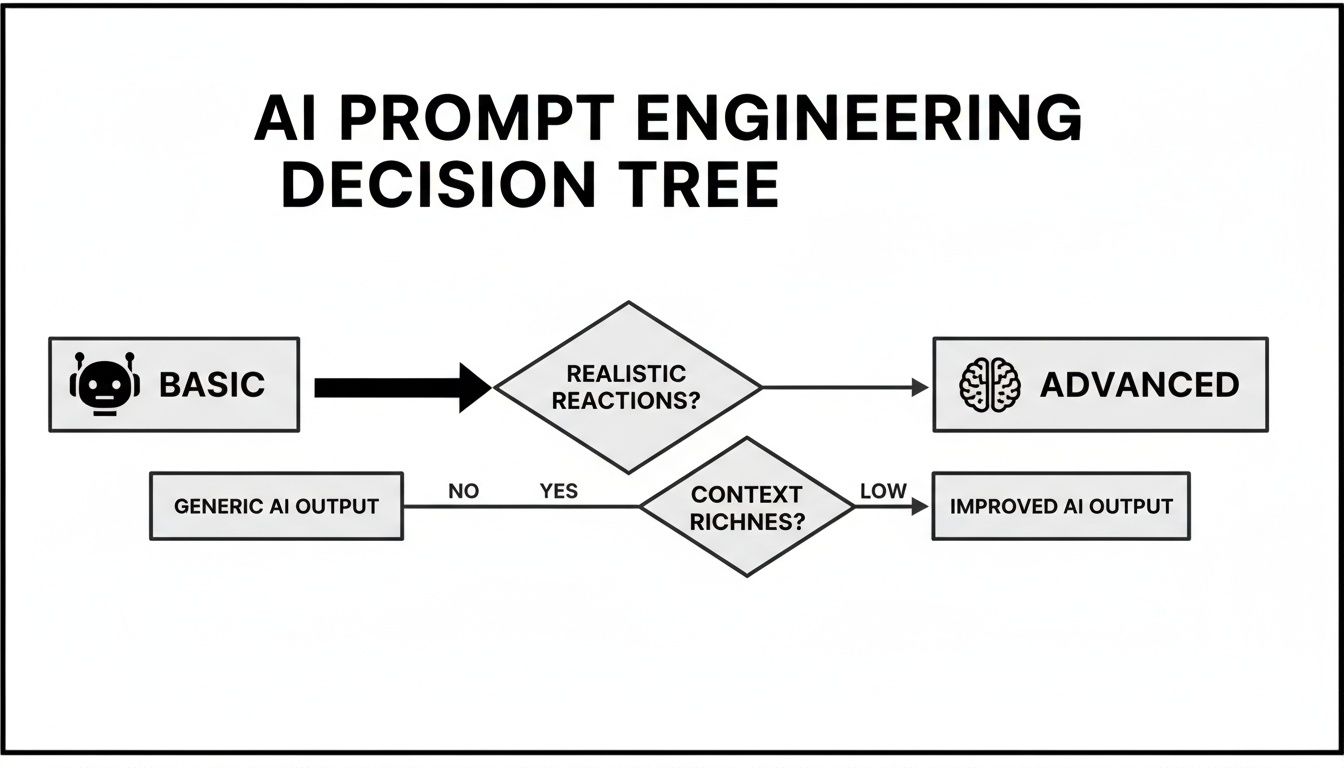
As you can see, getting those realistic reactions—the very foundation of a good story—is all about the depth of your prompting. The better the prompt, the better the AI's response, which directly fuels the quality of the choices it can then offer back to the user.
Mapping Your Branching Narrative
Let's stick with our dinner party scenario. The swap has just happened, and now the couple has to survive an evening with their closest friends without blowing their cover. A single, early decision can split the entire narrative wide open.
Imagine the host turns to you (in your partner's body) and asks about a private joke only the two of them share. Your response is the first major fork in the road:
- The Bluff: You try to play it cool with a vague but charming answer. This could send you down a path of high tension, where you're constantly on the verge of being discovered, using your wits to survive each conversation.
- The Confession: You pull the host aside and, in a moment of desperation, admit something is terribly wrong. This could branch into a completely different story about finding an unexpected ally and working together to figure out what happened.
- The Deflection: You fake a sudden coughing fit or a migraine to escape the question. This might lead to a frantic side-quest where you're rummaging through your new body's phone or wallet, desperately searching for clues while your partner tries to run interference.
Each of these paths offers a completely unique experience, a different tone, and a whole new set of challenges. By designing these crucial forks in the road, your body swap scenario stops being a simple chatbot and becomes a rich, unpredictable adventure shaped by every single thing the user decides to do.
Safely Exploring NSFW and Intimate Scenarios
Let's be honest: for many, navigating intimacy and adult themes is the whole point of creating a compelling body swap experience. This isn't just about scripting out a steamy scene. It’s about building a foundation of trust with your AI partner and drawing clear lines in the sand so the story feels both thrilling and completely safe.
The entire fantasy is built on vulnerability, which means you need to establish consent from the get-go, even in a fictional world.
Your best tools for this are soft and hard limits. Think of these as the safe words for your story. They are keywords and out-of-character (OOC) commands you set up early to steer the AI, giving you total control over how intense things get.
Setting Clear Boundaries
Before you get too deep into the role-play, it's smart to lay out your preferences. You can do this right in the initial prompt, creating a framework the AI respects from the very first message.
- Soft Limits: These are themes you’re okay with exploring, but maybe with some caution. For example, you might tell the AI, "Soft limits include non-consensual touching, but it should always be interruptible and lead to character conflict, not arousal." This signals that the theme is on the table but needs to be handled in a specific way.
- Hard Limits: These are your absolute deal-breakers—the lines the story will never cross. A direct instruction like, "Hard limits: No pain, violence, or humiliation in any intimate context," gives the AI a crystal-clear rule to follow.
The most powerful intimate scenes aren't always the most explicit. They're the ones built on trust and mutual understanding. When you set clear boundaries, you give yourself the freedom to explore your desires without hesitation, knowing the narrative will always respect your comfort zone.
Building Intimacy Naturally
The best way to create a truly immersive experience is to let intimacy build gradually. Don't just jump into the deep end. The initial awkwardness of waking up in someone else's body is the perfect starting point for this.
Focus your early prompts on sensory details and clumsy first discoveries. Describe the strange sensation of their hair brushing against your new shoulders, or the fumbling attempt to hold hands when your muscle memory is completely wrong. These small, shared moments of vulnerability are what forge a genuine connection. They make the later, more intense scenes feel earned and far more impactful.
For a deeper dive, our guide to NSFW AI interactions has more strategies on pacing your narrative just right.
This demand for deeply personal and fantasy-driven AI is a massive part of the market. While big-name platforms often see only around 5% of users upgrade to paid plans, there's a huge opening for specialized services that really nail emotional connection and adult fantasy. This is where platforms that can deliver rich, intimate scenarios really shine.
If you want to dig into the numbers, the 2025 State of Consumer AI report has some great insights. By getting comfortable with these safety tools, you can confidently craft a body swap story that hits every single note you're looking for.
Navigating Common Hurdles in Your Story
Even with the best tools in hand, hitting a creative wall when crafting your first body swap story is pretty common. You might find yourself wondering how to make the AI's reactions feel real or how to keep things interesting. Let's walk through some of the questions I hear all the time from creators just starting out.
Getting the AI to react authentically to the swap is all about grounding it in sensory details. Simply stating, "You are now in my body," won't cut it. You need to paint a vivid picture of the initial shock and disorientation.
The secret to a believable reaction is detailed prompting. Don't just tell the AI they've swapped; describe the feeling of your clothes on their skin, the weirdly unfamiliar pitch of your voice when they try to speak. The more sensory data you feed the AI, the more visceral and genuine its response will be.
What if My Story Gets Stuck or Boring?
If you feel the narrative start to drag, the easiest fix is to inject some external pressure. It’s a classic storytelling trick for a reason—it works. Throw in a ticking clock or a sudden conflict.
Imagine you swapped bodies just moments before a huge job interview, a tense holiday dinner with the in-laws, or a first date you’ve been looking forward to for weeks. This instantly creates stakes. Now, you both have to scramble to impersonate each other, which is a goldmine for drama, humor, and tension.
Another great move? Bring in a third character—a friend, a sibling, a coworker—who senses something is off. This forces you and the AI character to work together to keep your secret, pushing the story forward naturally.
Can I Do More Complex Scenarios?
You absolutely can, but it demands a much tighter grip on your prompts. If you're attempting a three-person swap, for example, clarity is non-negotiable. You have to constantly use character names and be explicit about who is in which body in every single prompt you write.
For instance: "As [Character A, now in B's body], you look over at [Character C, who is in A's body] and ask about..." My advice? Get comfortable with a two-person swap first. Nail that down, understand how the AI handles the concept, and then graduate to the more challenging—and incredibly rewarding—multi-character chaos.
How Do I Align NSFW Scenes With My Fantasies?
This is where being specific is your best friend. Vague prompts lead to vague, unsatisfying scenes. Don't be shy; use explicit and descriptive language to guide the AI. Clearly outline the actions, the desired pacing, and the emotional tone you're aiming for. This is where a platform built for this kind of creative freedom really shines.
- Set the Stage: Before you even start, use the platform's features to build out your AI's preferences. Setting up 'kink lists' or 'personality profiles' means they come into the scene already aligned with your interests.
- Steer in Real-Time: During the scene, don't be afraid to use out-of-character (OOC) commands to fine-tune the experience. A simple (OOC: Let's focus more on the sensory details of touch right now) can redirect the AI's focus without shattering the mood.
This level of direct control is what allows you to craft a body swap story that perfectly matches what's in your head.
Ready to stop dreaming and start creating? With Luvr AI, you have all the tools you need to build the immersive, detailed, and deeply personal body swap interactive story you've always wanted. Design your characters, set the scene, and explore a world of limitless fantasy. Start your unforgettable story today at Luvr AI.