
Create Your Own AI Girlfriend 😈
Chat with AI Luvr's today or make your own! Receive images, audio messages, and much more! 🔥
4.5 stars


In the world of adult conversational AI, the magic isn't just in the algorithm; it's in the community that forms around it. A vibrant, engaged user base transforms a platform from a simple service into a living, breathing ecosystem where users feel a true sense of belonging and connection. But cultivating that loyalty doesn't happen by accident. It requires more than just powerful tech; it demands a deliberate strategy grounded in proven community engagement best practices.
This guide moves beyond generic advice to provide a prioritized, actionable checklist specifically adapted for platforms where user interaction, creative freedom, and safety are paramount. We're not just talking about community; we're providing a blueprint for building one that is resilient, empowering, and deeply invested in its own success. You will learn precisely how to implement strategies for everything from initial user onboarding and creator empowerment to sophisticated moderation of NSFW content on Discord and in-app.
We will explore ten essential pillars, each designed to foster genuine connection and long-term retention. These pillars include building two-way communication channels, ensuring inclusive representation, and creating transparent decision-making processes that give users a real stake in the platform's future. By focusing on sustained, data-informed engagement, you can build a community that doesn't just use your platform, but champions it. This is your roadmap to transforming passive users into an active, thriving community that ensures lasting growth and unparalleled user loyalty.
1. Two-Way Communication and Active Listening
Truly transformative community engagement is not a monologue; it's a dynamic, ongoing dialogue. This foundational practice moves beyond simply broadcasting announcements and instead focuses on creating a system where community members feel genuinely heard, respected, and valued. It’s about building a reciprocal relationship where their feedback is not just collected, but actively sought, acknowledged, and used to shape the platform’s future. For an adult conversational AI platform, this means treating user and creator input as the most valuable asset you have.

This approach, popularized by community development leaders like John McKnight, emphasizes that authentic connection is built on listening first. When users, especially those creating NSFW characters or exploring deep roleplay fantasies, feel that their nuanced needs and concerns are understood, they transition from passive consumers to passionate co-creators of the platform's culture.
Why It's a Top-Tier Practice
Implementing robust two-way communication is one of the most effective community engagement best practices because it directly impacts loyalty and retention. When users see their suggestions lead to new features, improved moderation policies, or better creator tools, it proves their voice matters. This validation fosters a powerful sense of ownership and belonging, making them far more likely to remain active, advocate for the platform, and contribute positively to the community.
How to Implement It
- Create Diverse Feedback Channels: Don't rely on a single method. Use a mix of in-app feedback forms, dedicated Discord channels (e.g.,
#suggestions,#bug-reports), regular user surveys, and even informal Q&A sessions with the development team. - Practice Active Listening: When responding to feedback, paraphrase the user's point to confirm your understanding ("So, what I'm hearing is you'd like more granular control over the AI's memory..."). This small step shows you are truly processing their input, not just sending a canned reply.
- Close the Feedback Loop: This is the most crucial step. Publicly acknowledge valuable feedback and announce when it has been implemented. Create a "You Asked, We Listened" section in your patch notes or Discord announcements. For example, "Thanks to creator feedback, we've now added X, Y, and Z to the character editor." This closes the loop and demonstrates tangible results from user participation.
2. Partnership and Collaboration Building
Effective community engagement isn't a solo endeavor; it thrives on strategic alliances. This practice involves forging intentional partnerships with key figures and groups within your user base, such as influential character creators, moderators of fan-run forums, or organizers of roleplay communities. It’s about creating a symbiotic ecosystem where collaboration multiplies value for everyone, transforming individual contributors into powerful allies who actively help build and govern the platform. For an adult AI platform, this means empowering your most dedicated users and giving them a stake in its success.
This approach is rooted in the "Collective Impact" framework developed by John Kania and Mark Kramer, which argues that large-scale change requires coordinated effort across multiple players. When you formally partner with top creators or community leaders-offering them early access, direct lines of communication, or a share in the spotlight-you build a network of advocates who extend your reach and reinforce a positive platform culture from the inside out.
Why It's a Top-Tier Practice
Building strong partnerships is one of the most powerful community engagement best practices because it decentralizes community management and scales your efforts organically. These collaborators become an extension of your team, providing invaluable insights, helping to onboard new users, and self-regulating sub-communities. This fosters deep-seated loyalty and creates a resilient, user-led culture that is far more authentic and effective than any top-down corporate initiative could ever be.
How to Implement It
- Launch a Creator Partnership Program: Identify your most talented and active character creators and invite them into an exclusive program. Offer perks like early access to new features, a "Verified Creator" badge, and promotional opportunities on the platform’s main discovery pages.
- Establish a Community Ambassador Council: Select respected and long-standing community members to act as official ambassadors. Empower them to help moderate discussions, gather feedback, and represent the community's voice in regular meetings with your team.
- Co-Host Community Events: Collaborate with influential users or roleplaying groups to run contests, themed roleplay events, or character-building workshops. This shares the creative load and leverages their audience to boost engagement for everyone.
- Celebrate Joint Wins Publicly: When a partner's feedback leads to a new tool or their event is a success, celebrate it. Publicly credit them in announcements to show the community that collaboration is valued and rewarded.
3. Community Asset Mapping and Strengths-Based Approaches
Effective community management shifts the perspective from fixing problems to amplifying strengths. This approach, known as asset mapping, involves identifying and mobilizing the existing talents, resources, and passions within your user base. Instead of viewing the community through a lens of what’s lacking or needs moderation, you focus on what’s already strong: the master storytellers, the brilliant character designers, the helpful tech wizards, and the welcoming mentors.

Pioneered by John Kretzmann and John McKnight in community development, this model is incredibly potent for an adult conversational AI platform. By recognizing that your most engaged users are valuable assets, not just consumers, you empower them to build the community they want to see. This transforms your role from a top-down manager to a facilitator of user-led excellence, fostering a more resilient and self-sustaining ecosystem.
Why It's a Top-Tier Practice
Adopting a strengths-based approach is one of the most powerful community engagement best practices because it builds collective efficacy and reduces the burden on your internal team. When you highlight and connect talented creators or helpful members, you create a positive feedback loop where users feel seen and valued for their contributions. This validation encourages them to invest more of their time and skill, leading to higher-quality content, peer-to-peer support, and a culture of collaborative improvement.
How to Implement It
- Identify Your Assets: Actively look for users who excel in specific areas. Who creates the most popular characters? Who writes the best guides for newcomers? Who is always helping others troubleshoot in your Discord? Create an internal map of these community leaders and their skills.
- Create "Connector" Roles: Establish official or unofficial roles that empower these assets. Launch a "Creator Spotlight" to feature exceptional character designers, or create a "Mentor" role on Discord for users who are great at onboarding new members.
- Build Platforms for Contribution: Give your assets a stage. Host community-led workshops on character creation, create a dedicated forum for users to share roleplaying tips, or run a contest judged by a panel of your most respected creators. This channels their expertise for the benefit of everyone.
4. Inclusive and Equitable Representation
Effective community engagement ensures all voices are not just welcome, but actively sought out and amplified, especially those from marginalized or underrepresented groups. This practice involves intentionally dismantling barriers to participation and creating pathways for diverse users to influence the platform's development. For an adult conversational AI platform, this means ensuring that the community's full spectrum of identities, desires, and experiences is reflected and respected in all engagement efforts.
This approach, championed by equity-focused organizations like Race Forward and PolicyLink, recognizes that a truly healthy community is one where power and influence are distributed equitably. When users from diverse backgrounds see themselves represented and feel their unique perspectives are valued, they become more deeply invested in the platform’s success and its culture of safety and inclusion.
Why It's a Top-Tier Practice
Prioritizing inclusive and equitable representation is one of the most vital community engagement best practices because it builds a more resilient, innovative, and loyal user base. A homogenous community can lead to blind spots in product development, moderation policies, and content guidelines. By actively including diverse voices, you uncover unmet needs and creative opportunities, leading to a platform that feels safer and more welcoming for a wider audience, which directly fuels growth and long-term user retention.
How to Implement It
- Partner with Community Messengers: Identify and collaborate with trusted creators and leaders within specific sub-communities (e.g., LGBTQ+ roleplayers, users with disabilities, creators from different cultural backgrounds). Empower them to gather feedback and represent their groups.
- Remove Participation Barriers: Make engagement accessible. Offer feedback channels in multiple languages, ensure community spaces like Discord are accessible to users with disabilities, and hold events at times that accommodate various global time zones.
- Compensate for Expertise: Recognize that feedback and participation are forms of labor. Offer compensation, platform credits, or other tangible rewards to users who participate in detailed feedback sessions, beta testing groups, or community advisory panels.
- Evaluate with Data: Anonymously collect demographic data (with user consent) to understand who is participating in your engagement initiatives. Use this data to identify gaps and adjust your outreach strategies to ensure you are reaching a representative sample of your user base. For more on this, you can explore the principles of ethical AI development.
5. Transparent and Accountable Decision-Making
Effective community engagement hinges on trust, and trust is built through transparency. This practice involves openly sharing how platform decisions are made, what criteria are used, and how community input directly influences outcomes. It's about pulling back the curtain to show users that their engagement is not performative but a genuine force shaping the platform's rules, features, and future. For an adult conversational AI platform, this is critical when making sensitive decisions about content filters, monetization, or creator tools.
This principle is championed by open government movements and organizations like the Government Accountability Project, which argue that accountability is impossible without transparency. When users, particularly those invested in NSFW or complex roleplay scenarios, understand the "why" behind a policy change or a feature update, they are more likely to accept and adapt to it, even if it wasn't their preferred outcome. It replaces suspicion with understanding.
Why It's a Top-Tier Practice
Adopting transparent decision-making is one of the most powerful community engagement best practices for mitigating backlash and fostering long-term stability. When difficult decisions are made in a black box, users often assume the worst, leading to outrage and churn. By openly communicating the rationale, including the trade-offs and user feedback considered, you demonstrate respect for the community's intelligence and investment. This process builds a resilient community that can navigate necessary changes without fracturing.
How to Implement It
- Publish "Decision Summaries": For any significant policy or feature change, release a one-page summary in plain language. Explain the problem, the options considered, the final decision, and crucially, which community feedback points influenced the outcome.
- Explain What Wasn't Implemented: Transparency isn't just about celebrating wins; it's also about honestly addressing what you can't do. When a popular feature request isn't feasible, explain the technical or resource-based constraints. This builds credibility and manages expectations.
- Create a Public Roadmap: Use a tool like Trello or a dedicated page to share your development roadmap. Include columns for "Under Consideration," "In Progress," and "Shipped," and tag items that originated from community suggestions. This provides a clear, visual representation of how user input drives progress.
6. Sustained, Long-Term Engagement Over One-Time Events
Effective community building is a marathon, not a sprint. This practice shifts the focus from flashy, one-off events or occasional surveys to cultivating ongoing, deep relationships with your user base. It’s about creating a permanent structure for collaboration, where users evolve from participants into long-term partners who help govern and grow the platform. For an adult AI platform, this means building lasting trust with creators and users who are invested in the ecosystem's health and longevity.
This approach is rooted in community organizing traditions, championed by figures like Saul Alinsky, which emphasize that meaningful change comes from consistent, sustained effort. When creators of NSFW characters see a stable, long-term program for them to contribute to, they gain the confidence to invest their time and creativity, knowing the platform is committed to them beyond a single feedback cycle.
Why It's a Top-Tier Practice
Prioritizing sustained interaction is one of the most vital community engagement best practices because it builds institutional knowledge and deep-seated loyalty. One-time events can generate temporary excitement, but long-term programs create a core group of deeply engaged advocates. These dedicated users become your most valuable resource, providing nuanced, continuous feedback, mentoring new members, and helping to shape a resilient and mature community culture that can weather any storm.
How to Implement It
- Establish a Creator Advisory Board: Create a formal, ongoing council of top creators who meet regularly (e.g., quarterly) with your team. Give them a real voice in roadmap decisions, policy changes, and new feature development.
- Develop a Tiered Ambassador Program: Create clear pathways for users to deepen their involvement. Start with roles like "Community Helper" in Discord and allow them to graduate to "Super Creator" or "Moderator-in-Training," with each level offering more responsibility and rewards.
- Maintain a Consistent Rhythm of Interaction: Don't let communication go silent. Host regular, scheduled events like monthly developer AMAs ("Ask Me Anything"), weekly creator showcases, or bi-weekly feedback roundtables. Consistency shows commitment. Find more ways to provide consistent user interaction in our support articles.
- Document and Share Progress: Create a shared repository of knowledge from these long-term engagements. Public meeting notes, progress reports on community suggestions, and celebrating milestones together reinforce that the partnership is producing tangible results.
7. Culturally Responsive and Contextually Appropriate Methods
Effective community engagement recognizes that there is no one-size-fits-all approach. This best practice involves tailoring your strategies to reflect the diverse cultures, values, communication styles, and preferred participation methods of your user base. It means moving beyond a monolithic view of your community and understanding the distinct subcultures that form within it, from specific fandoms and roleplaying niches to groups centered around shared identities or languages. For an adult AI platform, this is about respecting the unique social norms and creative contexts that define different user segments.
This methodology, heavily influenced by community-based participatory research and cultural organizations, champions the idea that genuine connection requires meeting people where they are. When a user from a non-Western background or a member of a specific online subculture sees their community's unique communication style or values reflected in how you engage with them, it builds a profound level of trust and belonging that generic, corporate-style outreach can never achieve.
Why It's a Top-Tier Practice
Adopting culturally responsive methods is one of the most powerful community engagement best practices for fostering an inclusive and thriving ecosystem. It shows that you value users not just as individuals, but as members of diverse and meaningful groups. This validation prevents alienation, reduces friction between different community segments, and encourages deeper, more authentic participation. By honoring these subcultures, you empower them to become strong, self-sustaining pillars of your platform, leading to greater organic growth and long-term loyalty.
How to Implement It
- Recruit Community-Embedded Moderators and Ambassadors: Hire or empower volunteers who are already respected members of specific subcultures within your platform. They possess an innate understanding of the group's norms, humor, and sensitivities, making them far more effective than outsiders.
- Segment Your Communication Channels: Create dedicated spaces on Discord or within the app for specific interests or language groups (e.g.,
#anime-roleplayers,#sci-fi-worldbuilders,#espanol). This allows users to connect in a context that feels comfortable and relevant to them. - Adapt Content and Events: When running a contest or community event, consider how its theme and rules might be perceived by different cultural groups. Offer a variety of event types that appeal to different engagement styles, from competitive character-building showcases to collaborative storytelling projects.
- Practice Cultural Humility: Train your community management staff to approach interactions with a mindset of learning rather than dictating. Acknowledge that you won't always have all the answers and be open to being educated by your community members about their specific cultural contexts.
8. Empowerment and Leadership Development
Effective community management goes beyond moderation and event hosting; it involves intentionally cultivating leaders from within your user base. This practice is about identifying passionate creators and users and providing them with the tools, training, and opportunities to take on greater responsibility. It shifts the dynamic from a top-down, platform-led model to a collaborative ecosystem where trusted community members help shape the culture, guide new users, and advocate for the platform's health.
Inspired by the principles of community organizing popularized by figures like Paulo Freire, this approach recognizes that the most dedicated and insightful advocates are often the users themselves. By empowering your most engaged creators and roleplayers, you create a sustainable, self-regulating community that is more resilient and deeply invested in the platform’s long-term success.
Why It's a Top-Tier Practice
Empowering community leaders is one of the most powerful community engagement best practices for scaling your platform's culture and support systems. These leaders become an extension of your community team, providing invaluable peer-to-peer moderation, welcoming new members, and gathering nuanced feedback that official staff might miss. This fosters a strong sense of user agency and ownership, transforming dedicated users into true partners and multiplying your team's impact without a proportional increase in staff.
How to Implement It
- Create a Community Ambassador Program: Formalize leadership roles with clear expectations and rewards. Offer perks like exclusive access to beta features, a special badge or role on Discord, direct communication channels with the development team, and even compensation for their time.
- Provide Mentorship and Training: Don't just grant permissions; provide resources. Offer guidance on conflict resolution, how to host community events, and best practices for representing the platform. This ensures they feel confident and equipped for their role. You can learn more about empowerment and education to build out your program.
- Delegate Meaningful Responsibilities: Give community leaders real influence. Allow them to moderate specific Discord channels, organize character creation contests, write guides for new users, or even help test and provide feedback on upcoming features.
- Recognize and Celebrate Their Contributions: Publicly acknowledge the work of your community leaders in announcements, newsletters, or blog posts. This not only rewards their efforts but also showcases the leadership path to other aspiring community members, creating a virtuous cycle of engagement.
9. Data-Informed Engagement and Evaluation
Effective community engagement isn't based on guesswork; it's a science refined by data. This practice involves moving beyond intuition and using both quantitative metrics and qualitative insights to understand community health, measure the impact of your initiatives, and make informed decisions. It’s about creating a feedback loop where data tells you what’s working and what’s not, allowing you to continuously adapt and improve your strategy. For an adult AI platform, this means tracking everything from creator tool usage to sentiment in NSFW roleplay channels.
This data-driven approach, championed by evaluation experts and philanthropic organizations like the Ford Foundation, ensures that your efforts are not just busywork but are genuinely moving the needle. When you can see which features drive the most interaction or which types of content lead to higher user satisfaction, you can allocate resources more effectively and build a platform that truly resonates with its diverse user base.
Why It's a Top-Tier Practice
Basing decisions on data is one of the most critical community engagement best practices because it replaces assumptions with evidence. It allows you to prove the value of your community efforts to stakeholders and provides a clear roadmap for future development. By understanding user behavior, such as which AI character traits are most popular or where users drop off during onboarding, you can proactively address friction points, enhance popular features, and foster a more vibrant, sticky community.
How to Implement It
- Balance Quantitative and Qualitative Data: Don't just track metrics like daily active users. Combine this with qualitative data from user surveys, interviews, and sentiment analysis on Discord. For example, a spike in usage of a new roleplay feature is a good metric, but understanding why users love it through their own words is invaluable.
- Create Accessible Dashboards: Share key community health metrics with your users in a transparent and easy-to-understand format. This could be a "Community Health" section on your blog or Discord that shows things like new characters created, most popular genres, or average session length. This builds trust and shared ownership.
- Use Data to Drive Decisions: Use your findings to directly inform your product roadmap and community policies. If data shows that users who engage with creator spotlights are 50% more likely to become creators themselves, you know that program is worth investing in. This makes every decision a strategic one.
10. Resource Allocation and Community Control of Resources
Beyond simple feedback, the ultimate form of community empowerment is granting users direct control over platform resources. This advanced practice involves allocating a portion of the platform’s budget or development capacity and letting the community decide how it's used. It shifts the power dynamic from a top-down model to a collaborative one, recognizing that the most active creators and users have an unparalleled understanding of the platform's most urgent needs and exciting opportunities. For an adult AI platform, this could mean letting the community vote on which major feature gets developed next or how a creator fund is distributed.
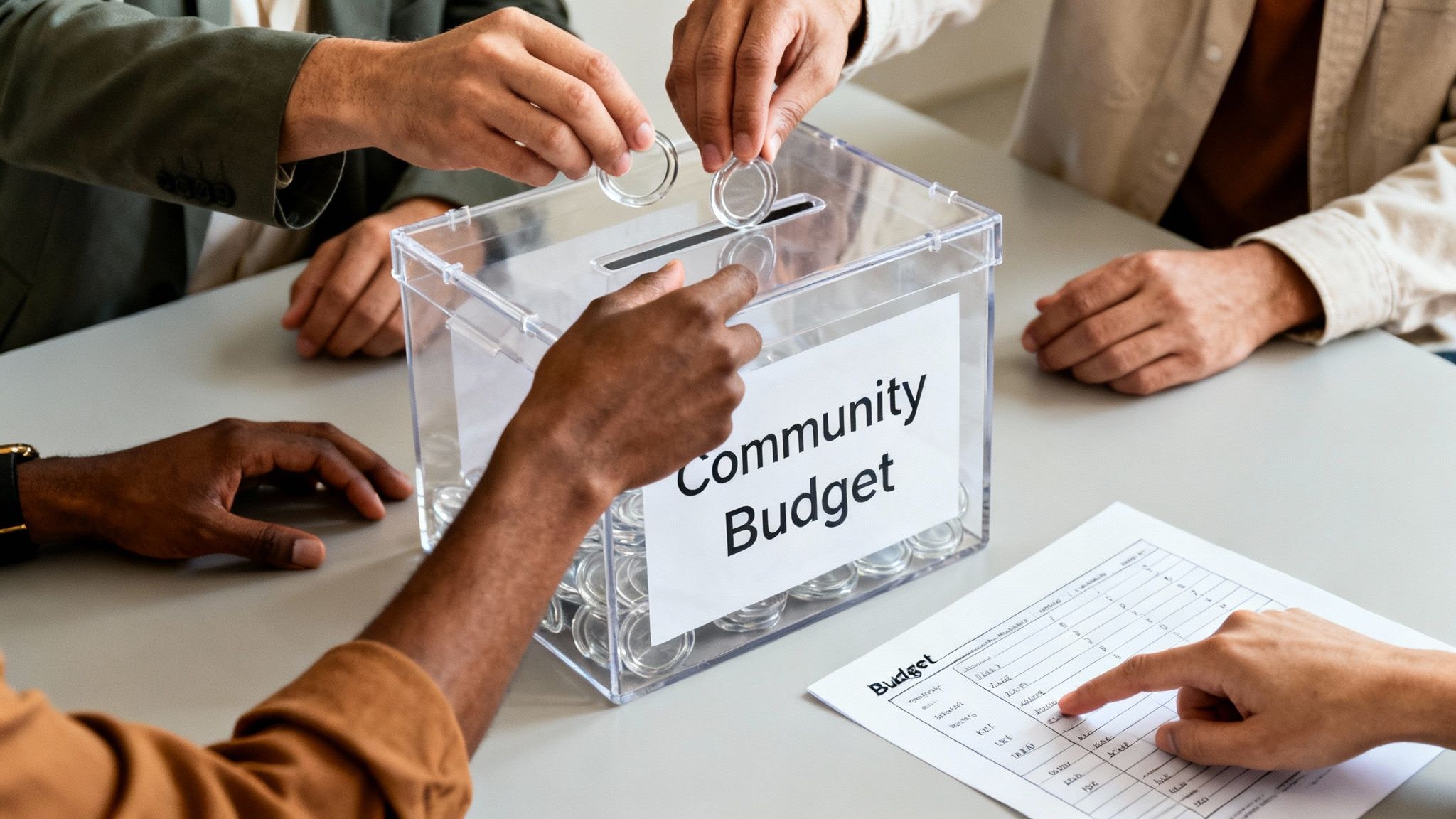
This concept, known as participatory budgeting and championed by organizations like the Participatory Budgeting Project, builds unprecedented trust. When creators of NSFW characters see a creator fund being distributed based on a transparent, community-led process, it proves the platform is genuinely invested in their success, not just its own profits. This transforms them into true partners in the ecosystem.
Why It's a Top-Tier Practice
Empowering the community with resource control is one of the most impactful community engagement best practices because it guarantees that development and investment are aligned with actual user desires. It eliminates guesswork and prevents the allocation of resources to features nobody asked for. This direct democracy fosters a profound sense of ownership and loyalty, as users see their collective decisions tangibly shape the platform's evolution. It’s the ultimate proof that their voice doesn't just matter, it holds real power.
How to Implement It
- Launch a Creator Fund: Dedicate a specific budget for creators. Allow the community to nominate and vote for creators who deserve grants based on the quality of their characters, their contribution to community guides, or their support for other users.
- Implement Feature Bounties or Polls: Set aside a portion of your development roadmap for community-chosen features. Present a list of potential new tools or improvements (e.g., advanced scripting for characters, group chat functionality) and let users vote with their activity or a token system on which gets prioritized.
- Establish a Transparent Process: Clearly define the total budget or resources available. Educate the community on the options, potential costs, and constraints. Use a clear and accessible voting mechanism, whether on Discord, in-app, or via a dedicated portal, and publicly report on the outcomes and progress of funded initiatives.
10-Point Community Engagement Best Practices Comparison
| Approach | 🔄 Implementation Complexity | ⚡ Resource Requirements | 📊 Expected Outcomes | Best Use Cases | ⭐ Key Advantages / 💡 Quick Tip |
|---|---|---|---|---|---|
| Two-Way Communication and Active Listening | Moderate–High (ongoing facilitation, multi-channel) | Moderate (staff time, platforms, facilitators) | Stronger trust, actionable community insights, increased buy-in | Service design, feedback loops, conflict resolution | ⭐ Builds trust & early problem detection; 💡 Close the feedback loop and ensure diverse representation |
| Partnership and Collaboration Building | High (multi-organization coordination, MOUs) | High (time for relationship building, shared resources) | Expanded reach, pooled expertise, reduced duplication | Cross-sector initiatives, scaling programs, system change | ⭐ Leverages diverse resources & sustainability; 💡 Define roles, metrics, and regular coordination early |
| Community Asset Mapping & Strengths-Based Approaches | Moderate (mapping, participatory interviews) | Moderate (mapping tools, facilitation, time) | Empowerment, cost-effective solutions, increased resilience | Local capacity-building, community-led program design | ⭐ Mobilizes existing strengths for sustainable solutions; 💡 Create visual asset maps and share publicly |
| Inclusive and Equitable Representation | High (intentional outreach, culture change) | High (funding for supports: transport, language, childcare) | Decisions reflecting diverse perspectives; improved equity and trust | Equity-focused policy, marginalized group engagement | ⭐ Improves relevance and equity of outcomes; 💡 Remove barriers (transportation, language, compensation) |
| Transparent and Accountable Decision-Making | Moderate–High (documentation, open processes) | Moderate (communication channels, record-keeping) | Greater institutional trust, legitimacy, learning | Budgeting, contentious decisions, public planning | ⭐ Legitimizes decisions and attracts quality participation; 💡 Publish plain-language decision summaries and explain rejections |
| Sustained, Long-Term Engagement Over One-Time Events | High (multi-year planning, continuity systems) | High (long-term funding, staff retention) | Deeper trust, better insights, sustained community ownership | Community organizing, long-term service adoption, capacity-building | ⭐ Produces durable relationships and outcomes; 💡 Plan multi-year touchpoints and document institutional memory |
| Culturally Responsive & Contextually Appropriate Methods | Moderate–High (tailored design, training) | Moderate (cultural training, local partnerships) | Higher participation, more authentic engagement, better relevance | Diverse cultural communities, indigenous or faith-based contexts | ⭐ Increases authenticity and participation; 💡 Partner with cultural leaders and respect protocols |
| Empowerment and Leadership Development | High (capacity building, power-sharing) | High (training, mentorship, compensation) | Stronger community agency, leadership pipelines, sustainable change | Resident-led initiatives, youth leadership, advocacy campaigns | ⭐ Builds local power and self-determination; 💡 Start with skills assessment and compensate leaders |
| Data-Informed Engagement and Evaluation | Moderate–High (measurement design, analysis) | Moderate–High (data systems, evaluation expertise, privacy safeguards) | Measurable impact, course correction, funding support | Program improvement, funder reporting, participatory evaluation | ⭐ Demonstrates effectiveness and guides decisions; 💡 Co-design indicators with community and balance qual/quant |
| Resource Allocation & Community Control of Resources | High (governance redesign, power transfer) | High (budget, technical assistance, transparent systems) | Resources aligned to community priorities, increased ownership, equity | Participatory budgeting, resident grant-making, community land trusts | ⭐ Aligns spending with local priorities and reduces power imbalances; 💡 Start with clear budget limits and provide proposal support |
Your Next Steps in Community Building
Navigating the landscape of community engagement can feel like an overwhelming task, but it doesn't have to be a journey taken in the dark. The ten pillars we've explored, from Two-Way Communication to Community Control of Resources, are not just abstract ideals. They are the essential building blocks for creating a vibrant, resilient, and deeply loyal user base, especially within the unique ecosystem of an adult conversational AI platform.
Mastering these community engagement best practices is less about a final destination and more about a continuous, dynamic process of listening, adapting, and co-creating with your users. It's the difference between a platform that users simply visit and one they consider a digital home. The true power lies in shifting your perspective from seeing users as consumers to recognizing them as invaluable partners, creators, and advocates who are the very lifeblood of your platform's success and innovation.
Distilling the Essentials: Your Core Takeaways
The path to a thriving community is paved with intentional action, not just good intentions. As you move forward, keep these critical takeaways at the forefront of your strategy:
- Authenticity Over Everything: True engagement stems from genuine interaction. Whether it's through transparent decision-making or active listening on your Discord server, users can spot inauthenticity from a mile away. Prioritize real conversations and honest feedback loops.
- Empowerment is Your Greatest Retention Tool: Giving your community, especially your creators, a sense of ownership and influence is paramount. By implementing leadership development programs and ensuring they have a say in resource allocation, you transform passive users into passionate, long-term evangelists for your brand.
- Safety and Inclusivity are Non-Negotiable: For a platform centered on personal connection and NSFW content, creating a safe, inclusive, and equitable space is the bedrock of your entire community. This isn't just about moderation; it's about embedding these principles into every feature, policy, and interaction.
Turning Knowledge into Action: Your Go-Forward Plan
Reading about best practices is one thing; implementing them is where the magic happens. Don't try to boil the ocean. Instead, take a measured, strategic approach to building a more engaged community starting today.
- Conduct a Quick Audit: Begin by evaluating your current community efforts against the ten principles discussed. Where are your biggest gaps? Are you excelling in Data-Informed Engagement but failing at Inclusive Representation? Identify one or two key areas for immediate improvement.
- Launch a "Listening Tour": Dedicate the next two weeks to active listening. Create a specific channel in your Discord for feedback, run a user survey focused on community needs, or host an "Ask Me Anything" (AMA) session with your development team. Focus on understanding user pain points and desires directly from the source.
- Pilot One New Initiative: Choose one actionable practice and launch a small-scale pilot program. This could be as simple as starting a "Creator of the Week" spotlight (Partnership and Collaboration) or creating a public roadmap for new features (Transparent Decision-Making). Measure the impact, gather feedback, and iterate before rolling it out more broadly.
Ultimately, building a powerful community is the most sustainable moat you can create for your platform. It’s an investment that yields exponential returns in user loyalty, organic growth, and invaluable product insights. By committing to these community engagement best practices, you are not just managing users; you are cultivating a dynamic, creative ecosystem that will set you apart and drive your platform's long-term success. The strongest communities are built one authentic interaction at a time, creating a powerful feedback loop that fuels both user satisfaction and groundbreaking innovation.
Ready to see these principles in action? Join Luvr AI, where we are building a community-first platform dedicated to empowering creators and fostering genuine connections. Experience a space designed for creative freedom, safety, and authentic engagement by visiting Luvr AI today.