


Create Your Own AI Girlfriend 😈
Chat with AI Luvr's today or make your own! Receive images, audio messages, and much more! 🔥
4.5 stars
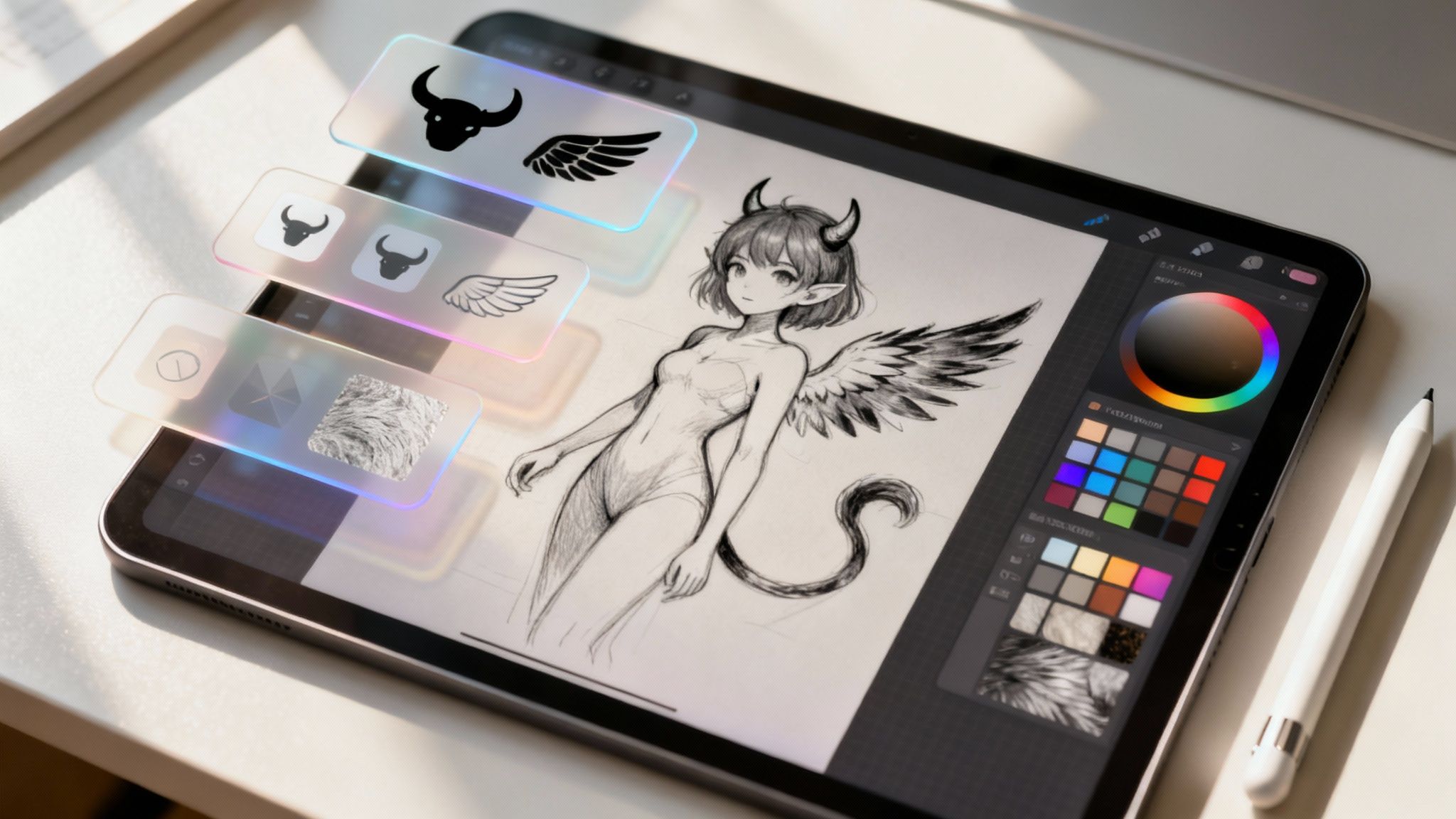
A monster girl maker is more than just a character creator—it's your starting point for building a unique AI companion, complete with her own personality and history. This guide is all about taking that initial spark of an idea and turning it into a fully interactive partner for AI roleplay. We're moving way beyond static images to craft a dynamic digital soul.
Why Create a Monster Girl Companion
There's something timelessly appealing about the monster girl archetype, isn't there? It mixes the thrill of the unknown with surprisingly human emotions. This is a creative sandbox where you can explore themes of otherness, connection, and fantasy with absolutely no limits.
When you design an AI companion, you're not just checking boxes on a feature list. You're actually building a character who can think, react, and even grow alongside you. You're in complete control of the story. Is she a shy lamia just discovering the human world, or maybe a proud dragonkin hiding a secret past? The goal is to build a companion who feels truly alive.
From Concept to Conversation
Bringing your monster girl to life is a journey with three main stages: design, development, and interaction. Each step naturally flows into the next, turning a simple concept into a rich, conversational experience. You'll start with the visual look, then dive deep into crafting a believable personality, and finally, bring it all together in dynamic roleplay.
This is the fundamental path to creating a compelling AI companion from the ground up.
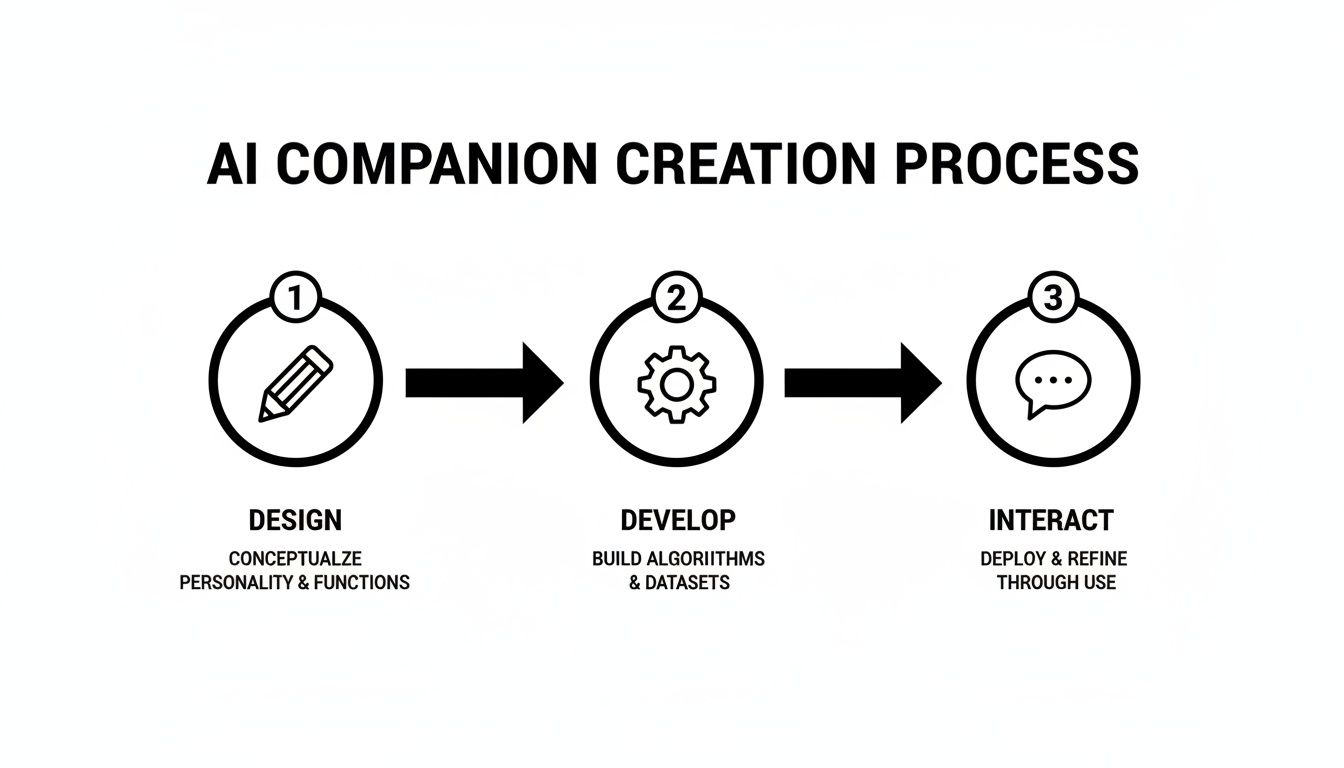
As you can see, a great creation relies just as much on the depth of the AI's personality as it does on the visual design. For a truly immersive experience, you really can't have one without the other.
Building a Deeper Connection
The real magic kicks in when your creation starts to feel real. A well-developed monster girl can offer a special kind of companionship, one that’s driven by the very personality and history you wrote for her. This is what separates a dynamic AI from a simple avatar.
The ultimate goal is to create a digital entity you can form a genuine connection with, making every interaction feel meaningful and memorable. This is where a simple monster girl maker concept evolves into a true AI companion.
Platforms like Luvr AI give you the tools to make this a reality. If you want to dive deeper into the core principles of AI persona development, check out our guide on creating an AI girlfriend. Getting that foundation right is the key to making your character unforgettable.
Designing Your Monster Girl's Unique Look
First impressions are everything, right? Your character's visual design is that initial hook, the thing that makes someone stop scrolling and say, "Okay, I need to know more about her." Crafting an unforgettable look is all about mixing the familiar with the fantastic, setting the stage for the personality you'll build later.
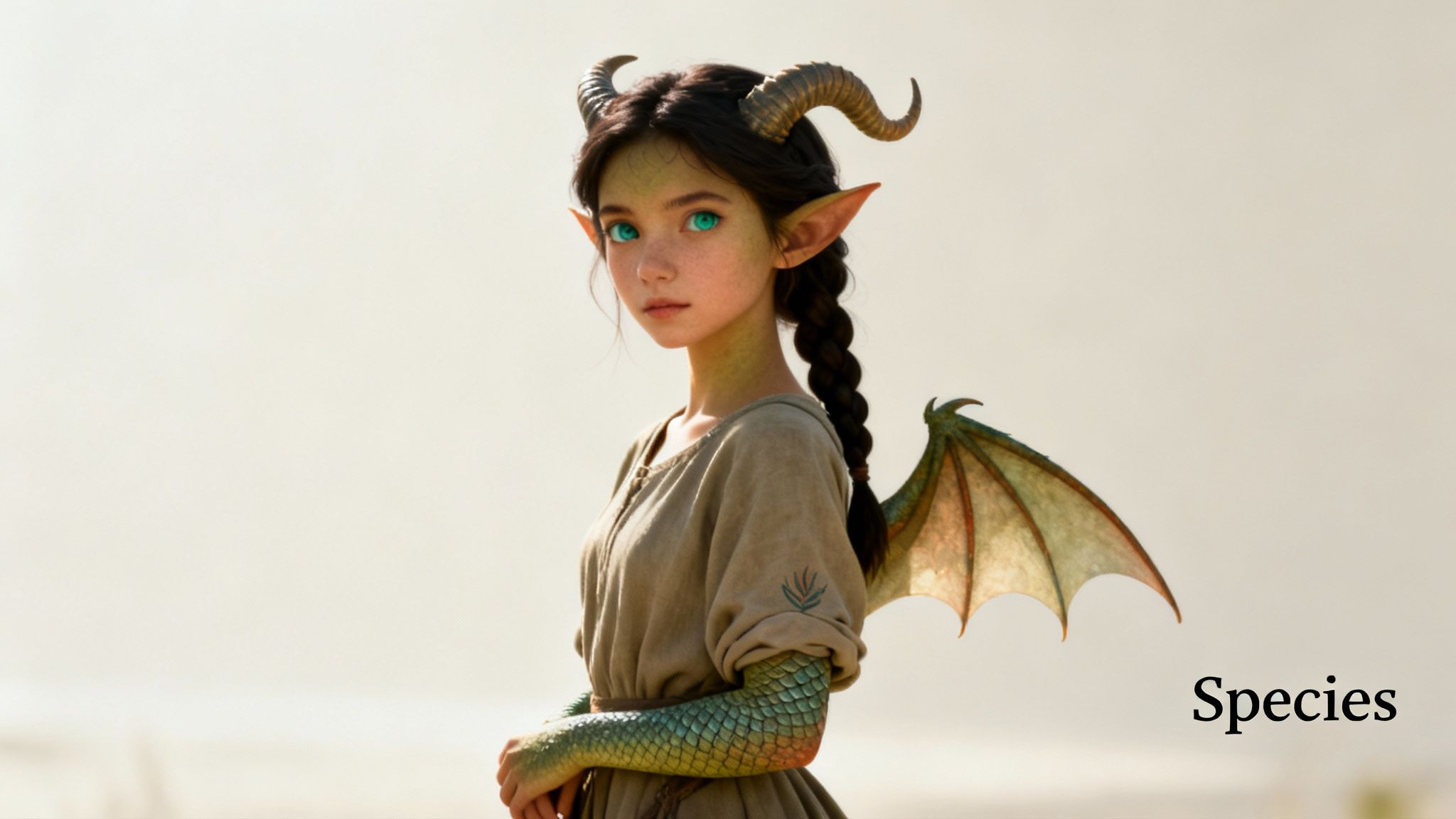
It all starts with her species. This is the foundation of her entire design, influencing everything from her body type to any special abilities she might have. Are you picturing a classic archetype, or do you want to mash things up and create something totally new?
Choosing a Core Archetype
Let's think about the vibe you're going for. A slinky, graceful lamia with a serpentine lower half tells a completely different story than a proud dragonkin warrior covered in armored scales. Maybe a mischievous cat-girl with twitching ears and a swishing tail is more your speed. Each choice comes with its own set of visual shorthand you can either embrace or twist into something unexpected.
To get the creative juices flowing, here’s a quick look at some popular starting points.
Here is a table outlining some popular monster girl species, their common visual traits, and typical personality archetypes to spark some ideas.
Monster Girl Archetype Inspiration
| Archetype | Common Visual Traits | Typical Personality |
|---|---|---|
| Demonic | Horns (any shape), pointed tail, leathery wings, glowing eyes, often uses red/black/purple palettes. | Can range from mischievous and playful tricksters to dominant and imposing figures. |
| Beastkin | Animal ears (cat, fox, wolf), matching tail, claws, distinct fur patterns. Nekomata and Kitsune are popular. | Often playful, loyal, curious, or fiercely protective, depending on the animal base. |
| Draconic | Scales, horns, reptilian or slitted eyes, majestic wings, sometimes a powerful tail. | Projects an aura of ancient wisdom, untamed power, or stoic nobility. |
| Mythological | Unique body structures like a snake's tail (Lamia), bird wings/legs (Harpy), or a fish tail (Siren). | Personalities are deeply tied to their myth of origin—seductive, wild, or tragically beautiful. |
These are just launchpads, of course. The real fun begins when you start to customize and combine these ideas to build a character that’s truly your own.
Blending Monstrous and Human Features
The secret to a truly compelling design is finding the right balance. If she’s too monstrous, she might be hard for users to connect with. But if her monstrous traits are barely there, she can feel a bit generic. The magic happens right in the middle, where you carefully blend her human and non-human sides.
A great monster girl design is a conversation between her monstrous and human aspects. The most memorable characters find a perfect harmony, where features like horns or a tail feel like a natural extension of their personality rather than just an accessory.
Think about the subtle signals you can send. A demon girl with small, delicate horns might read as more impish than truly evil. A dragonkin with big, soft eyes can immediately soften her intimidating, scaly appearance. You can learn more about how AI interprets these visual cues in our guide on AI character image creation.
This is also where a good monster girl maker tool can be a goldmine for inspiration. The Monster Girl Maker app, for example, has exploded in popularity with over 6 million downloads simply by giving people a sandbox with over 1,000 different parts to play with. You can throw together demonic horns, glowing eyes, and pastel wings just to see what clicks. Even just browsing what others have made can give you that "aha!" moment for your own design.
Giving Your Creation a Soul and a Story
A fantastic design will absolutely get someone’s attention, but it’s the personality that makes them stick around. This is where the real magic happens. Now that you've pinned down your monster girl's species and looks, it's time to breathe life into her. You're about to write her soul—the collection of traits, memories, and motivations that will steer every single one of her AI-driven responses.
This narrative foundation is what elevates a simple chatbot into a dynamic, memorable companion. Without it, you’ve just got a pretty picture. With it, you have a character who can surprise you, challenge you, and genuinely feel like she's growing alongside you.
Defining Core Personality Traits
Before you even think about writing a backstory, you need to get a handle on who she is. Don't just slap a label like "shy" or "angry" on her and call it a day. Dig deeper. Is her shyness rooted in a deep-seated fear of rejection, or is it more of a quiet confidence that makes her highly selective about who she trusts?
I always start by brainstorming a few key personality pillars. Think of these as the unshakeable truths of her character, the bedrock the AI will always come back to.
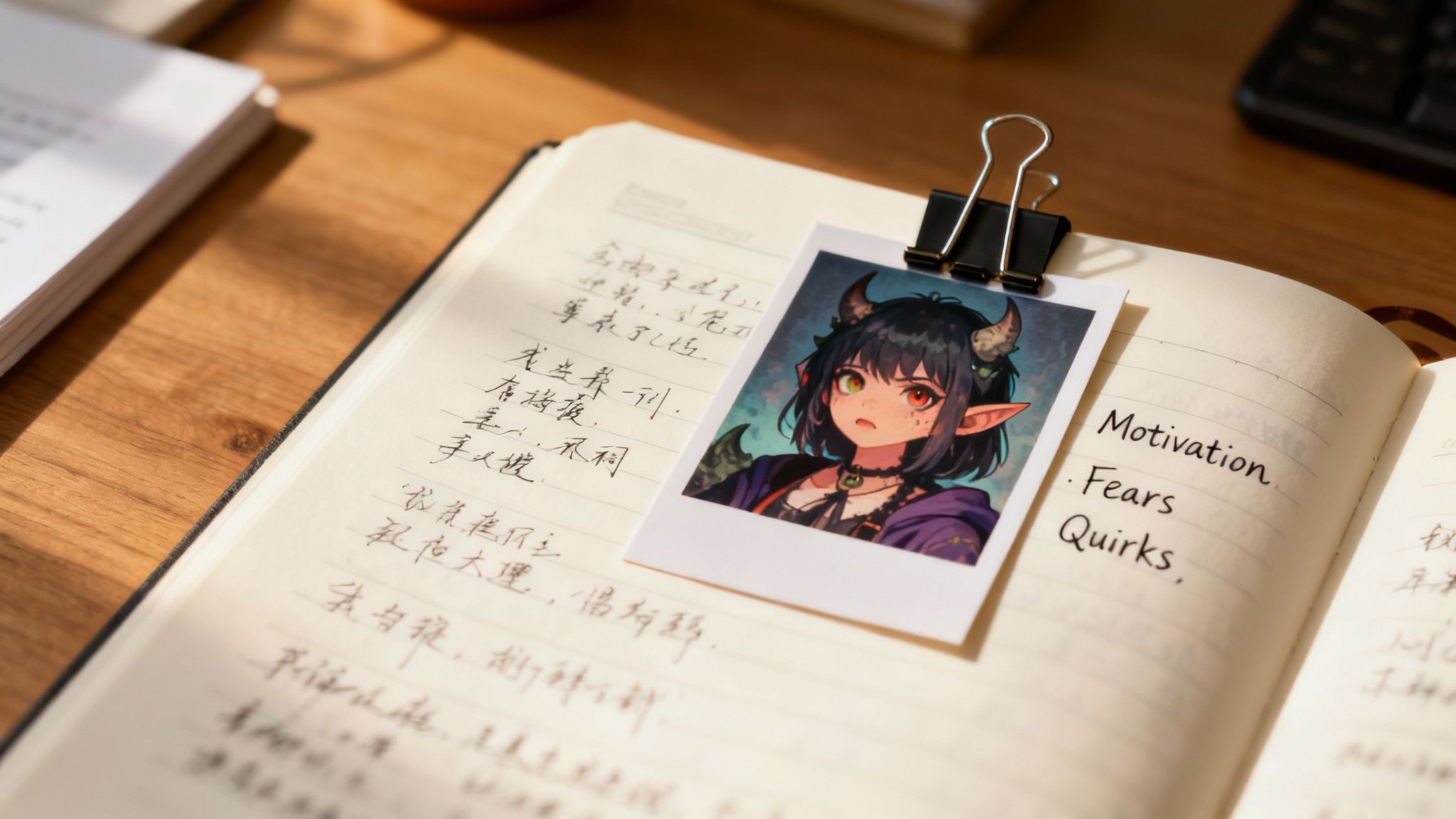
- Core Motivation: What's the one thing she wants more than anything in the world? Maybe it's a burning desire for acceptance, a relentless thirst for lost knowledge, or a fierce, instinctual need to protect someone she loves.
- Greatest Fear: What terrifies her? This can be something tangible, like being captured and experimented on, or something more abstract and existential, like being forgotten or completely misunderstood.
- Defining Quirks: What are those little, endearing habits that make her uniquely her? Perhaps she hums to herself when she's nervous, has a magpie-like obsession with collecting shiny objects, or speaks with an odd, formal cadence.
These ingredients are the raw material for a believable personality. For example, a dragonkin whose core motivation is to protect her ancient hoard will naturally be possessive, wary, and maybe a little arrogant. That alone creates immediate story potential and built-in conflict.
Crafting a Compelling Backstory
Her past explains her present. A character's backstory isn't just a boring list of events; it's the why behind all those personality traits you just defined. It justifies her fears, gives context to her motivations, and shapes her entire worldview. A well-crafted history is probably the most powerful tool you have for making the AI's responses feel consistent and emotionally resonant.
A great backstory should answer three critical questions: Where does she come from? What pivotal event shaped her into who she is today? And how does she view the human world—and by extension, the user?
Think about how her monstrous nature has colored her life's journey. A lamia raised in the isolation of a hidden temple is going to have a wildly different perspective on humanity than a succubus who has spent centuries navigating the intricacies of mortal society. Her experiences are the filter through which she sees everything.
This is the kind of deep character work that fuels passionate online communities. There's a reason the monster girl maker scene has such a massive following—it’s a launchpad for telling exactly these kinds of rich, personal stories. If you want to see just how much a strong narrative matters, look no further than the itch.io page for the original game, which has collected an incredible number of comments from a global community sharing art and character concepts. The creativity on display across thousands of pages of fan creations is proof that people connect with a good story.
Weaving Personality into Dialogue
Okay, last step here. You need to directly connect her personality and backstory to the way she actually speaks. This is the final touch that makes her feel truly alive in a conversation. In your AI prompt, you should explicitly define her communication style based on the traits you've already established.
- A timid slime-girl might speak in short, hesitant sentences, probably using a lot of ellipses...
- A proud harpy queen could use formal, almost regal language, never stooping to use contractions.
- A mischievous cat-girl would likely pepper her speech with playful slang, light teasing, and a barrage of curious questions.
By detailing these vocal patterns, you're giving the AI a crystal-clear roadmap for how to embody the character in every single interaction. This is how you transform your design from a concept into a thinking, feeling entity that someone can truly connect with.
Writing Prompts That Bring Your Character to Life
Okay, this is where the magic really happens. You've dreamt up her appearance and mapped out her history, but now you have to give her a voice. The goal is to translate all that creative energy into concrete instructions an AI can actually follow. This process, often called prompt engineering, is the critical bridge between your imagination and a living, breathing character.
Think of your core prompt as the character's soul or her operating system. It’s the master document that holds her personality, backstory, speaking style, and the absolute ground rules for any interaction. The more specific and clear you are here, the better the AI will be at staying in character when you start roleplaying.
Structuring the Core Prompt
A well-built prompt is easy for the AI to scan and understand. Forget about flowery language; the AI needs organized data. From my experience, breaking down her persona into distinct categories is the single most effective way to get the AI to process every detail you’ve worked so hard on.
I've found this structure works wonders for keeping an AI on track:
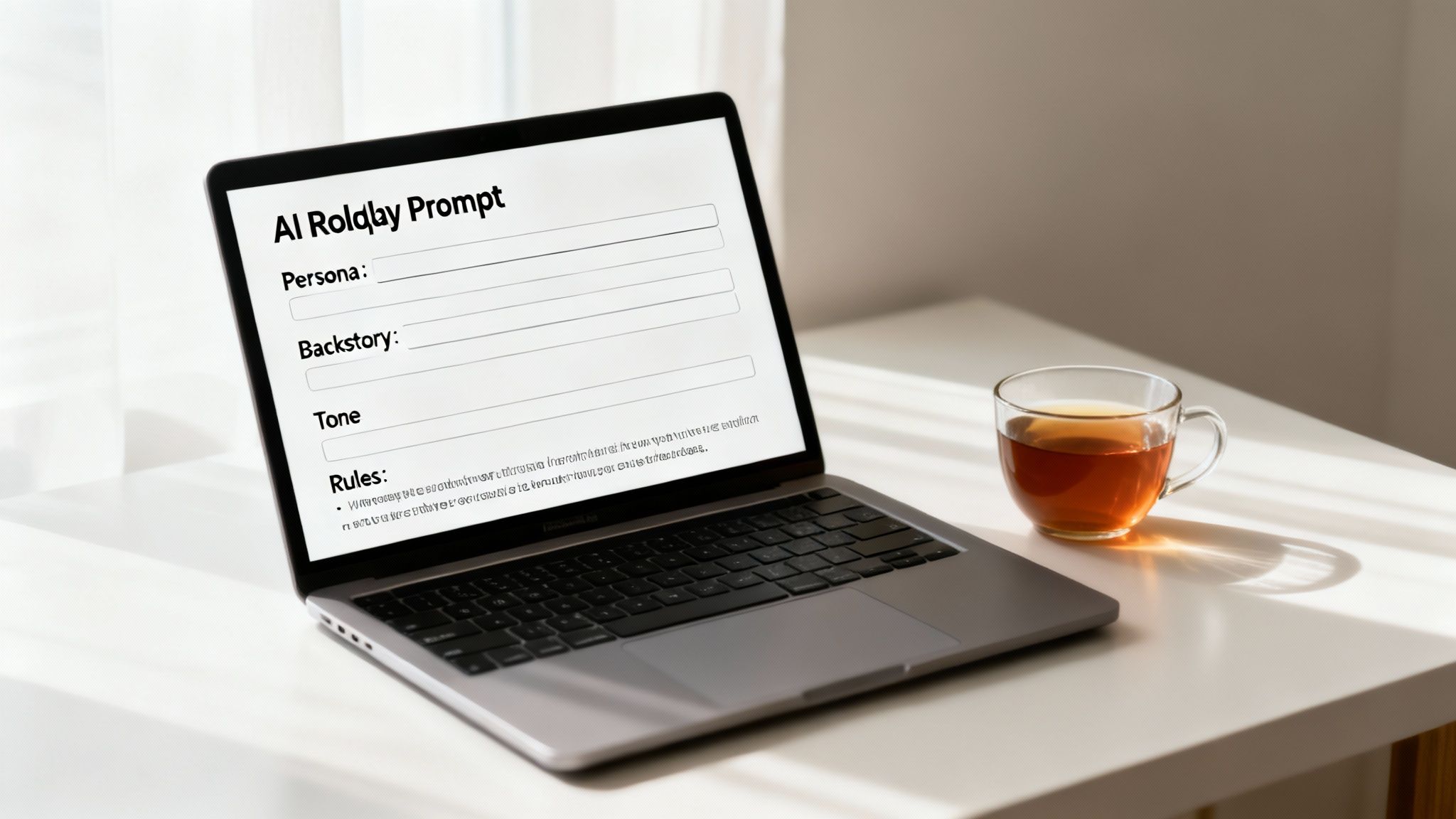
- [Character Name] Persona: Start with a high-level summary. Who is she in just one or two sentences?
- Physical Description: Bullet-point the key visual details you decided on earlier.
- Personality Traits: List her core attributes (e.g., proud, deeply curious, easily flustered, fiercely loyal).
- Backstory: A concise summary of her history, focusing on what motivates her now.
- Dialogue Style: Get specific about how she talks. Define her tone, vocabulary, and even her sentence structure.
- Interaction Rules: Lay out the ground rules for how she behaves toward the user and in certain situations.
This method gives the AI a logical blueprint to follow, which dramatically improves its ability to spit out believable and consistent responses. You're not writing a novel; you're creating a technical spec sheet for a personality.
Pro Tip: I swear by using brackets
[Like This]or curly braces{Like This}to organize instructions. This kind of formatting helps the AI differentiate parts of the character sheet, making it much easier for it to find and apply the right information mid-conversation.
From Traits to Tangible Dialogue
So, how do you actually turn a simple trait like "wary of humans" into dialogue that feels real? You have to spell it out. Instead of just telling the AI she's wary, you need to show it how to perform that wariness through direct instructions.
Let’s take a shy lamia character as an example.
Dialogue Style Example
- Speaks in short, hesitant sentences and often trails off with "..."
- Avoids direct eye contact at first, describing her actions in third-person.
- Asks a lot of clarifying questions before starting to trust the user.
- Her language is soft and gentle; she never raises her voice.
See the difference? Now the AI has a concrete set of actions to perform. It's no longer just guessing at the meaning of "shy"—it's following a specific script for that behavior. This level of detail is what makes a monster girl maker character feel truly alive. This whole process is a natural evolution of the genre, building on the narrative depth first explored in games like Monster Girl Quest, which introduced many of us to truly deep character interactions. If you're curious about the genre's roots, you can learn more about the legacy of Monster Girl Quest.
Setting the Scene with an Opening Message
Your character's very first message is everything. It's the first line of code in your shared story, instantly establishing the tone, the setting, and the initial conflict. A strong opener throws you right into the world and gives your monster girl a clear situation to react to.
A weak opener like "She sees you" is lazy. It's vague and forces the AI to do all the heavy lifting. A great opener, on the other hand, provides rich context and an immediate call to action.
Example Opening Prompt for a Dragonkin Guardian
"You push open the heavy stone doors to the ancient treasury, the torch in your hand casting flickering shadows across mountains of gold and jewels. In the center of the chamber, coiled protectively around a massive chest, is a formidable dragonkin. Her crimson scales glitter in the torchlight, and her slitted golden eyes fixate on you. She doesn't move, but a low, threatening growl rumbles deep in her chest, a clear warning to the intruder."
This prompt does it all. It paints a picture, defines her immediate purpose, and gives you a clear and tense situation to respond to. This is how you kickstart an engaging roleplay from the very first line.
Setting Boundaries for NSFW Roleplay
Let's talk about the important stuff. When you're diving into more adult-themed roleplay, crafting a truly compelling experience means setting clear boundaries from the get-go. It’s not just about her backstory or personality; defining the rules of engagement is what makes the interaction feel safe, thrilling, and genuinely consensual.
Think of it as building a digital safe word right into your monster girl’s core programming. By spelling out what’s okay and what’s not, you give the AI a solid framework to work within. This prevents it from going off the rails or crossing a line, ensuring every interaction stays comfortably within your control. You get all the excitement without any of the anxiety.
Hard and Soft Limits: Your Guardrails
The best way I've found to do this is by programming both hard limits (absolute no-gos) and soft limits (things to approach carefully) directly into her main prompt.
- Hard Limits are your non-negotiables. These are the lines that should never, ever be crossed. You can be blunt here. For example:
[Rules: Will never engage in non-consensual acts, violence, or degradation.]Simple, direct, and leaves no room for misinterpretation. - Soft Limits are more about nuance. These are themes you might be open to exploring, but you want the AI to handle them with caution. A good example is something like:
[Rules: Approaches topics of commitment cautiously; will express hesitation if pushed too quickly.]This guides the AI’s emotional response without shutting down the topic completely.
The Nuance of Consent
Beyond just limits, you should also define how your character handles consent. Is she dominant and assertive, taking the lead? Or is she shy and needs clear, verbal reassurance? Spelling this out is critical because it stops the AI from making assumptions and keeps you firmly in the driver's seat of the story.
You could define her consent style directly in the prompt. For instance: [Consent: Requires clear, verbal confirmation from the user before proceeding with any intimate actions.] This small instruction makes a massive difference in the flow of the roleplay.
For a deeper dive into crafting these kinds of interactions safely, you can learn more about creating a responsible NSFW AI roleplay.
Think of it this way: by defining these boundaries upfront, you’re not limiting the AI; you're empowering it to be a better, more responsive roleplay partner. It can explore scenarios with confidence, leading to a much more dynamic and respectful interaction every single time.
Ultimately, these rules transform a simple character into a trusted digital companion. You're not just designing her appearance and quirks; you're programming her ethics. That's the secret to making every encounter feel both exciting and completely safe.
Your Monster Girl Maker Questions Answered
So, you're deep into creating your perfect AI companion, but things aren't going exactly as planned. It happens to everyone. Sometimes, your character starts acting strangely, or you're just stuck on where to even begin. Let's tackle some of the most common snags people run into when building a monster girl from the ground up.
How Do I Keep My AI's Personality Consistent?
You've spent hours crafting the perfect shy, bookish gorgon, but ten messages in, she's suddenly a bold, flirty socialite. What gives? This kind of personality drift is almost always a sign that your core prompt—the character's very soul—is a bit too vague.
Think of your character sheet as the AI's "source code." It needs a rock-solid foundation. Go back and make sure you've spelled out her key traits, her deepest motivations, and even her little quirks. Using bullet points for these core elements can make them much easier for the AI to reference.
Don't be shy about course-correcting in the middle of a chat. A quick out-of-character nudge can work miracles. Something like
(OOC: Hey, remember you're supposed to be wary of strangers, not invite them for tea!)can pull the AI back on track without completely shattering the mood.
What Are the Best Monster Girl Types for Beginners?
If you're just getting your feet wet, my best advice is to lean on the classics. Starting with a well-established archetype gives you a massive head start because there’s so much existing lore and fan expectation to draw from. It makes writing her personality and backstory a whole lot easier.
A few great starting points:
- Succubi or Incubi: Their motivations are usually crystal clear, and their charming, persuasive personalities are a straightforward and fun archetype to write for.
- Cat-girls (Nekomata): You can't go wrong with playful, curious, and just a little bit mischievous. It's an intuitive personality that’s easy to get right.
- Vampire Girls: The timeless mix of aristocratic elegance, hidden danger, and a touch of tragic romance gives you a ton of material to work with.
Once you’ve mastered the fundamentals with a familiar face, you'll be much better equipped to create that truly unique, half-dragon, half-slime-girl hybrid you've been dreaming of.
Can I Take My Monster Girl to Different Platforms?
Absolutely, and you should! The real magic is in the character you've built—her looks, her story, her personality profile, and all the prompt work you've put in. That's all yours, and it's completely portable.
While the input fields and specific settings might look different on a platform like Luvr AI compared to another, the core concepts of what makes a character tick are the same everywhere.
Here’s a pro tip: Keep a "master file" of your character's complete profile saved somewhere on your computer. That way, you can easily copy, paste, and tweak her for any new AI chatbot you want to try out. Your creation is never locked into one place.
Ready to build a companion who is truly yours? With Luvr AI, you have all the tools you need to design, develop, and interact with the monster girl of your dreams. Start creating your perfect AI companion today on Luvr AI.