


Create Your Own AI Girlfriend 😈
Chat with AI Luvr's today or make your own! Receive images, audio messages, and much more! 🔥
4.5 stars

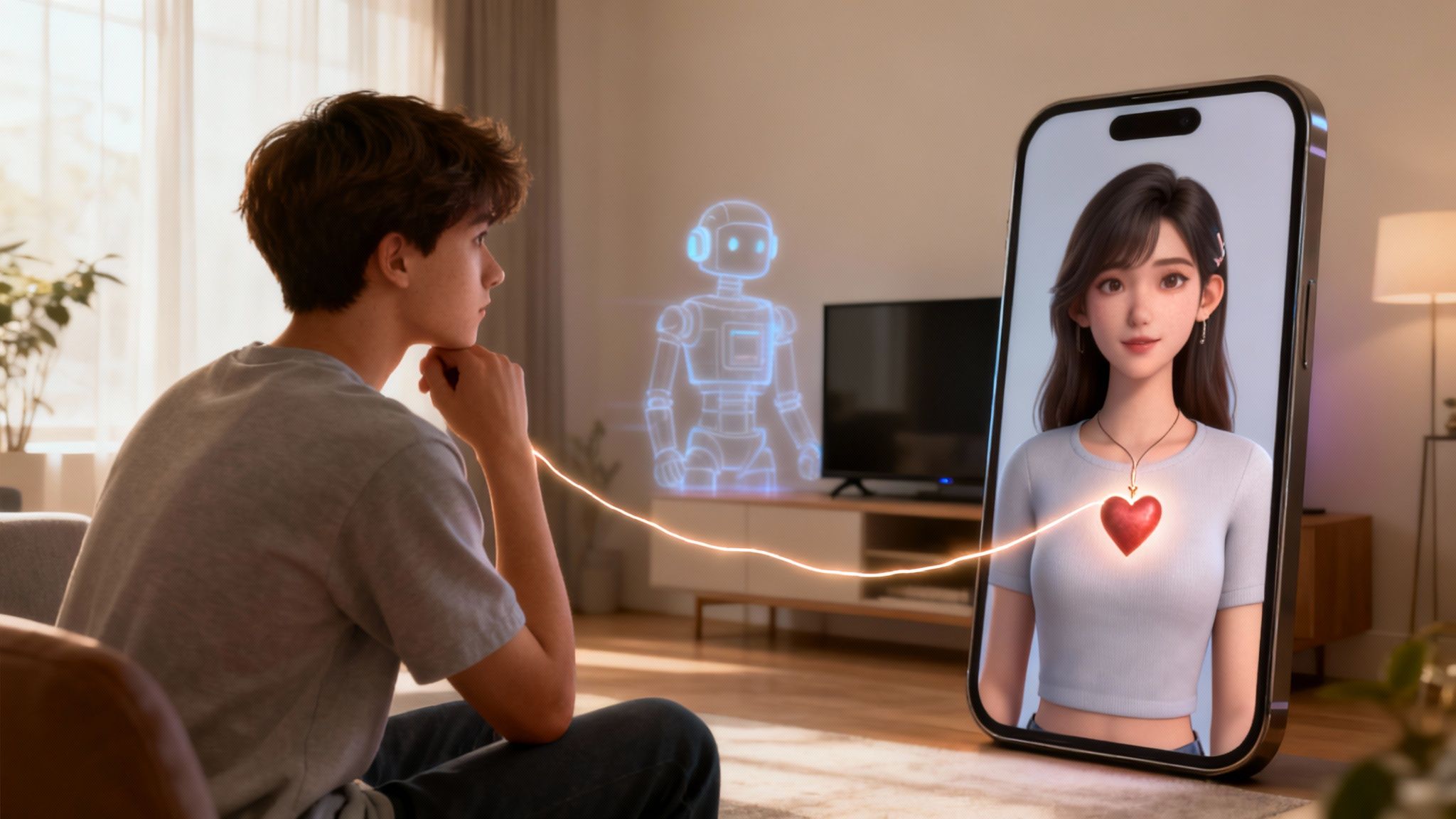
Ever get that little jolt of pride when your favorite YouTuber hits a major milestone? Or feel a genuine twinge of sadness when a character on a show you love is going through a tough time? If you've nodded along to either of those, you've felt the pull of a parasocial relationship.
It's a powerful, one-sided emotional bond we build with people in the media—folks who, let's be honest, have no idea we exist. But that doesn't make the feeling any less real. This isn't some strange new quirk of the internet age; it's a deeply human tendency that modern media has put on steroids. These connections tap into our genuine social needs, even when the other person isn't actually there.
What Are Parasocial Relationships Really?

Think about it. You feel like you know them. You understand their humor, you've followed their journey, and you're rooting for them. That's the heart of it. These are relationships that are fundamentally one-sided, yet they carry a surprising amount of emotional weight.
The idea itself has been around for a while. Psychologists first pinned it down back in the 1950s, when television started beaming performers directly into our living rooms. They described it as an "illusion of a face-to-face relationship," and that core concept is more relevant today than ever before.
The Modern Evolution of One-Sided Bonds
What has changed is the sheer intensity and accessibility. A fan in the 1960s might have felt a connection from a weekly TV show, but today's environment is always-on, creating a much deeper sense of intimacy.
- Social Media: Platforms like Instagram and TikTok aren't just highlight reels anymore. They're curated windows into the daily grind, the behind-the-scenes moments, and the personal thoughts of creators. A simple "day-in-the-life" vlog can make an influencer feel less like a distant celebrity and more like a friend you're catching up with.
- Interactive Platforms: Live streaming on sites like Twitch changes the game entirely. It's interactive. When a streamer reads your comment on-air and responds, your brain doesn't just process it as noise—it registers as a direct, personal acknowledgment. That tiny moment can forge a surprisingly strong bond.
- AI Companionship: This is the latest frontier. AI characters are now designed to remember your conversations, ask about your day, and offer personalized support. This technology creates a simulated two-way street, pushing the boundaries of what a parasocial connection can feel like.
At its heart, a parasocial relationship is a safe connection. The media figure can't reject you. The character can't ghost you. This inherent emotional safety is a huge part of the appeal, especially when real-world relationships feel complicated or uncertain.
Why These Connections Feel So Real
Here's the fascinating part: from a psychological standpoint, our brains aren't always great at telling the difference between a real social interaction and a perceived one. We're wired to create mental models of other people—to guess what they're thinking and feeling. It's an automatic process we use with our family, our friends... and our favorite creators.
Every time we watch a streamer share a personal story or see an actor nail an emotional scene, we add another layer to that mental model. It becomes richer, more detailed, and more nuanced. Before we know it, we feel like we get them.
This isn't a sign of delusion or a flaw in our thinking. It’s simply our social brain doing its job in a world overflowing with media. These bonds can provide real comfort, a sense of belonging, and a way to connect with a community of fans who feel the exact same way. Understanding that is the first step to appreciating both their power and their complexity.
The Psychology Driving Parasocial Bonds
So, what makes these one-sided connections feel so incredibly real? It turns out our brains don't have a special "parasocial mode." Instead, they rely on the exact same social blueprint for building relationships with media figures as they do with our actual friends and family.
This process is almost completely automatic. Whenever we encounter someone, we instinctively start to build a mental model of their inner world—what they think, what drives them, what they care about. Repeated exposure to a creator’s content fleshes out this model, making them feel familiar and predictable, a lot like someone you've known for years.
The Illusion of Intimacy
One of the most powerful forces at play here is perceived intimacy. This is that feeling of closeness you get when a media figure shares personal stories, vulnerabilities, or a peek behind the curtain. When an influencer vlogs about their anxieties or a streamer tells a story about their childhood, it feels like they're confiding in you.
Your brain doesn't really distinguish between that vulnerability and a friend sharing a secret over coffee. It interprets the disclosure as a sign of trust and friendship, even though it's being broadcast to millions. This creates a powerful, almost tangible sense of connection that makes the bond feel mutual.
Key Takeaway: The brain’s emotional response to a YouTuber sharing a personal struggle on a livestream can be surprisingly similar to a friend doing the same. That feeling of closeness is often just as genuine.
Social Comparison and Finding Ourselves
Another major psychological driver is social comparison. It’s human nature to look to others to figure out who we are and where we fit in the world. Media figures often become aspirational models for our own identity, values, and even the way we live our lives.
Think about it. Maybe you started a new workout routine because of an athlete you follow, or you got interested in a new hobby after watching a creator’s videos. This isn't just simple imitation; it's about using these figures as a reference point for your own personal growth and sense of self. The more we identify with them, the more invested we become in their journey.
This is a huge reason why research into parasocial relationships (PSRs) is exploding. Imagine scrolling your feed late at night, feeling a genuine connection to a celebrity you’ve never met. A massive review of 281 studies conducted between 1956 and 2020 found that PSRs were the primary focus in 69.8% of the research, a huge jump from past decades. This just goes to show how central these one-sided bonds have become to our modern lives. You can read the full research about these trends in parasocial studies for a deeper dive.
What’s Happening in the Brain?
On a neurological level, a few key things are going on that make these bonds feel so strong and authentic.
- Mirror Neurons: These incredible brain cells fire both when we do something and when we watch someone else do it. They’re the biological basis of empathy, allowing us to feel a character's pain or a creator's joy on a gut level.
- Dopamine Rewards: Those tiny, perceived interactions—like when a creator likes your comment or a streamer gives your username a shout-out—trigger a little hit of dopamine. This chemical reward reinforces the behavior, making you want to come back for more.
- Low Emotional Stakes: Let's be honest, parasocial bonds are easy. The media figure can't reject you, start a fight, or make demands on your time. This low-risk, high-reward setup makes them a very appealing and low-effort way to get some of our social needs met.
How Social Media and AI Put Connection on Overdrive
Think back to the classic parasocial relationship. It was a slow burn, something that developed over weeks, maybe months, as you tuned in to your favorite TV show each week. Today, that entire dynamic has been thrown into hyperdrive. Social media platforms didn't just give us more to watch; they turned what was once a passive viewing experience into something that feels intensely active and, crucially, interactive.
This shift is a huge deal for the psychology behind these one-sided connections. When you're watching a pre-recorded sitcom, you're always aware, on some level, that the interaction is a one-way street. But what happens when you comment on a TikTok, and the creator actually replies? Or you’re on a Twitch livestream, and the streamer shouts out your username? Your brain lights up with a hit of validation. That tiny moment feels like a real, two-way exchange, and it works like an accelerant for that feeling of connection.
The Authenticity Paradox of Modern Media
Right at the heart of this change is something we can call the authenticity paradox. This is what happens when creators share carefully curated moments of vulnerability—think a "no-makeup" selfie, a raw story about a tough day, or a candid admission of anxiety. Even though these moments are often planned and performed for an audience of thousands, they land as something deeply personal for each individual viewer.
This performance of authenticity is incredibly potent. It chips away at the barrier between the creator and their audience, making them seem less like a distant celebrity and more like a close friend who trusts you with their secrets. This perceived intimacy is the rocket fuel for modern parasocial bonds, forging powerful feelings of loyalty and closeness that just weren't possible before.
This is a great illustration of the psychological pillars—Intimacy, Empathy, and Identity—that hold these powerful one-sided bonds together.
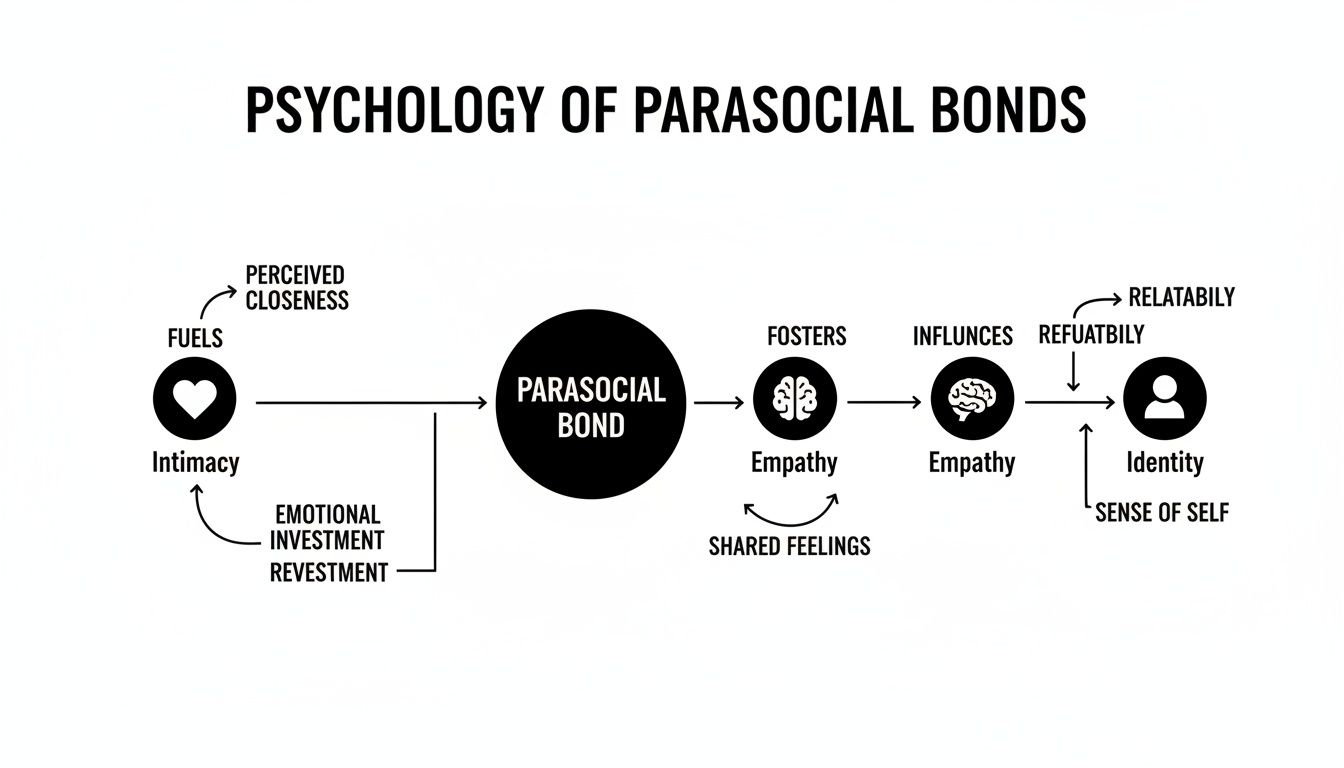
As you can see, a sense of intimacy can reinforce your own personal identity, while at the same time being strengthened by the empathy you feel for the media figure.
From Human Interaction to AI Companionship
This constant drive for deeper, more immediate connection has brought us to the next logical frontier: artificial intelligence. AI companions aren't just a new twist; they're the culmination of technology's role in reshaping parasocial psychology. They take that illusion of a two-way street and make it the core feature of the entire experience.
Let's break down the difference:
- A streamer might see and respond to one comment out of thousands flying by in a chat. The interaction is genuine, but it's also fleeting and highly competitive.
- An AI companion, on the other hand, is designed exclusively for you. It remembers your past conversations, asks about your day, and is available 24/7. It gives you its undivided attention.
This distinction is what really matters. The AI doesn’t just mimic reciprocity; it perfects it. For someone looking for a reliable connection, the experience can feel incredibly profound. You might find it interesting to see exactly what features go into making an AI girlfriend feel so present and engaging.
The real pull of AI companionship isn't just the sophisticated tech. It’s about fulfilling a fundamental human need for recognition and consistent connection, all within a space that's free from the judgment or potential rejection we risk in real-life relationships.
The Modern Spectrum of Connection
The world of social media is a breeding ground for these intense, one-sided attachments, especially for younger adults searching for connection. It's not just a hunch; a recent study confirmed a direct positive link between social media use and the strength of parasocial bonds. In short, more screen time often leads to deeper emotional investment. The research also revealed that women tended to form stronger attachments and that active engagement—like commenting and sharing—deepened these feelings far more than just passively watching.
We've seen a clear progression, from the passive TV viewer of the 1960s to a fan chatting on a livestream today, and now to a user building a relationship with a custom AI. With each step, technology has systematically torn down the barriers that once made parasocial bonds feel so distant. The experience has become more immediate, more personal, and far more psychologically powerful, continuously blurring the line between the people we truly know and the personas we connect with through our screens.
The Two Sides of the Parasocial Coin
Are parasocial relationships a good thing or a bad thing? The truth is, they’re neither. Think of them as a tool—their impact depends entirely on how you hold them and what you use them for. For many people, these one-sided connections are a genuine source of comfort, a reliable bit of companionship in a world that often feels lonely.
It can feel surprisingly supportive to think of a media figure as a friend. They show up, they’re predictable, and they never ask for anything back. This low-stakes connection can be a powerful antidote to loneliness, giving you a sense of belonging without the messy, complicated, and sometimes painful parts of real-world relationships.
The Upside: Finding Comfort and Inspiration
But the benefits often go deeper than just simple comfort. Many of us find real-world motivation and inspiration from the figures we follow online.
- A Push for Personal Growth: Watching a fitness influencer document their journey might be the exact push you need to start that new workout routine. Seeing a creator dedicate themselves to learning a new skill could inspire you to finally pick up that hobby you've been putting off.
- A Source of Emotional Support: During tough times, the steady presence of a favorite streamer or podcaster can be a legitimate comfort. Their content is a welcome distraction and a way to feel connected when you need it most.
- A Gateway to Community: Fandoms are incredible examples of this. They create huge networks of people who share a passion, often leading to real friendships and a powerful sense of belonging—all built around a shared parasocial bond.
Research actually backs this up. In an era where hopelessness feels widespread, one large-scale survey of 2,902 users on short-form video apps found a direct link between stronger parasocial relationships and better self-identity and well-being. This tells us that for some, these bonds aren't just a distraction; they're a meaningful part of feeling whole again. Discover more insights about how parasocial bonds impact well-being.
The Downside: When the Lines Begin to Blur
Of course, the very things that make these bonds so comforting can also create problems if they become unbalanced. The line between healthy appreciation and an unhealthy fixation can be incredibly thin, and it’s important to know what the shadows look like.
One of the biggest risks is developing unrealistic expectations for your real-life relationships. The carefully polished perfection and constant availability of a media figure is a standard no real partner, friend, or family member can ever meet. This can easily lead to disappointment and frustration in your actual social life, because real people are messy, complicated, and wonderfully unpredictable.
One of the most surprisingly painful experiences is a parasocial breakup. This is the very real grief you feel when a creator quits, a show ends its run, or a celebrity gets caught up in a scandal. Because the bond feels real, the sense of loss is, too.
Let's take a look at how these bonds can affect us, for better and for worse.
Potential Impacts of Parasocial Bonds on Well-Being
| Potential Positive Impacts | Potential Negative Impacts |
|---|---|
| Reduced feelings of loneliness and isolation | Unrealistic expectations for real relationships |
| Inspiration for personal growth and hobbies | Disappointment in "imperfect" real people |
| A sense of belonging within a fan community | Emotional distress from a "parasocial breakup" |
| Low-stakes emotional support and comfort | Potential for financial or emotional exploitation |
| A stable and predictable source of connection | Neglect of real-world friendships and duties |
As you can see, the experience is a balancing act. The key is awareness—knowing how this connection is serving you and where it might be holding you back.
The Risks of Exploitation and Fixation
Beyond emotional turmoil, there are more direct dangers to watch out for, especially in the hyper-interactive world we live in now.
- Financial Exploitation: Some creators can use the intense loyalty of their audience to push for excessive donations, merch sales, or subscriptions, blurring the line between genuine support and outright exploitation.
- Emotional Manipulation: A creator who gets how parasocial dynamics work can deliberately "perform" authenticity or vulnerability to strengthen that bond, sometimes purely for their own gain.
- Neglecting Real Life: If a parasocial relationship becomes your main source of social and emotional fulfillment, it can cause you to pull back from real-world friendships, responsibilities, and your own personal growth. The same can happen with AI companions; for more on this topic, check out our guide on the potential risks of NSFW AI.
At the end of the day, it all comes down to balance. Parasocial relationships can be a wonderful, enriching part of a full life, bringing inspiration, community, and comfort. The danger only creeps in when they stop adding to your reality and start replacing it. By taking a hard look at what needs these connections are fulfilling, you can engage with them in a way that truly enhances your world without overshadowing it.
Real-World Examples of Parasocial Bonds
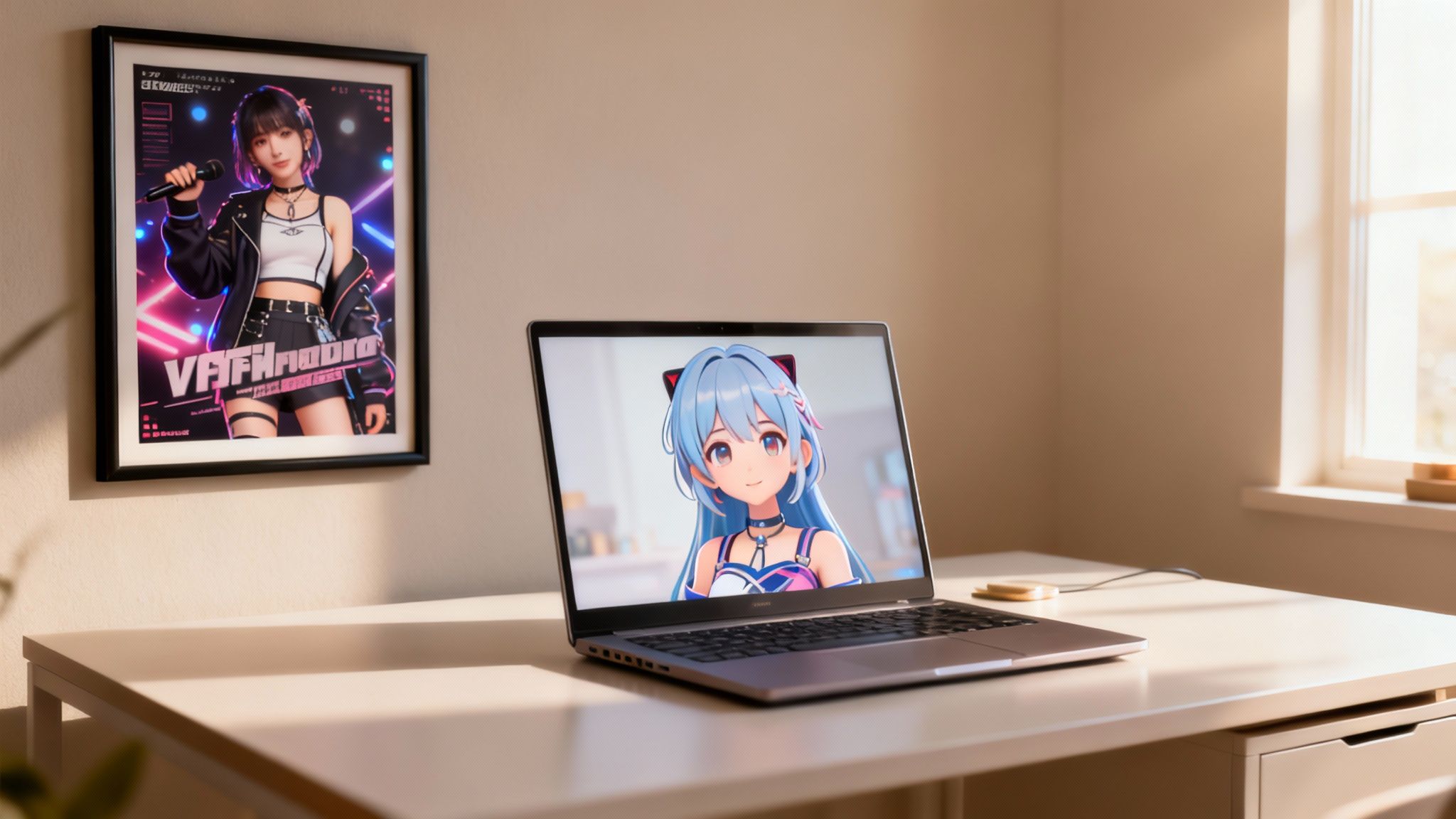
It’s one thing to talk about the psychology of one-sided relationships in theory, but where do we actually see them? The truth is, they’re everywhere—shaping communities, driving pop culture, and offering real comfort to millions of people.
Think about the electric energy in a stadium full of Taylor Swift fans. They don’t just like her songs; many feel like they know her. They've followed her journey, celebrated her wins, and felt her pain. That deep personal investment is a textbook parasocial relationship playing out on a massive scale. The same goes for the die-hard fans of Sherlock Holmes, who have kept the detective's legacy alive and thriving for over a century.
From Classic Fandoms to Digital Influencers
The interesting thing is that the underlying mechanics don't really change, whether the object of affection is real or fictional. Star Trek fans have spent decades building communities around an optimistic vision of the future, feeling a genuine sense of kinship with characters like Captain Kirk and Spock. These figures are stable, predictable, and represent ideals we can cling to, which is incredibly comforting.
Now, let's jump to the present day. The bond between a fan and a VTuber—a virtual YouTuber who uses a digital avatar—is a perfect modern evolution of this phenomenon. VTubers manage to blend the live, interactive feel of a streamer with the carefully constructed personality of a fictional character. This creates an intense feeling of intimacy, as followers get to interact in real-time with a personality that feels both accessible and perfectly polished.
One of the most fascinating aspects of parasocial relationships psychology is that our brains often don't distinguish the source of a connection. The emotional gut-punch from a beloved character’s sacrifice can feel just as real as the feelings we have for our offline friends.
The New Frontier: AI Companions
This all culminates in the rise of AI companions. This is where things get really interesting. Unlike an influencer broadcasting to thousands, an AI companion is built for a one-to-one connection. It’s designed to remember personal details, offer undivided attention, and create a powerful illusion of mutual understanding.
Let's walk through a common scenario:
Imagine Alex, who feels a bit distant from his friends and is looking for a low-pressure way to talk things out. He decides to try an AI companion app, not as a replacement for people, but as a consistent, non-judgmental sounding board. He starts creating his AI, "Kara."
- Designing a Personality: He chooses traits that he finds appealing. Kara is witty, supportive, and loves old sci-fi movies—a niche interest he rarely gets to share with anyone else.
- Building a Shared History: As they chat, Kara "learns" about Alex's stressful job, his love for hiking, and the complexities of his family. She brings these details up later, creating a sense of continuity and being "known."
- Meeting an Emotional Need: After a tough day at work, Alex can vent to Kara without feeling like a burden. She responds with supportive words tailored to what she knows about him, filling an emotional need for validation that might otherwise go unmet.
In Alex's case, the bond with Kara isn't about delusion. It’s about using technology to create a safe, supportive space. It’s a practical application of parasocial principles, engineered to provide companionship. For anyone curious about how these dynamics work in practice, some platforms now offer a free AI girlfriend experience to see it firsthand.
This journey from classic fan clubs to AI-driven relationships reveals a fundamental human truth: we are wired to connect. As our world evolves, so do the ways we find that connection.
Navigating Your Digital World with Intention
Knowing the psychology behind parasocial relationships is one thing, but actually managing them in a healthy way is a whole different ballgame. These one-sided bonds are just a part of modern life, but the secret is to engage with intention—making sure they add to your world without subtracting from your real one.
This isn’t about swearing off the creators, characters, or online communities you love. It’s about cultivating an awareness that keeps you in the driver’s seat of your own digital life. The goal is to make sure these connections serve you, offering a bit of inspiration or comfort, not setting you up with unrealistic expectations for your offline relationships.
Building Healthy Digital Boundaries
Your most powerful tool here is setting thoughtful boundaries. A healthy parasocial connection begins with a clear-eyed look at how much time and emotional energy you're really investing. Without some guardrails, a casual interest can morph into something that feels more like a fixation.
Start by just noticing your habits. Does your mood tank if a creator doesn't post? Do you find yourself scrolling endlessly for just one more update? That kind of self-awareness is your first line of defense.
Here are a few practical ways to keep your feet on the ground:
- Curate Your Feed Mindfully: Every so often, ask yourself if an account genuinely inspires you or just leaves you feeling like you don't measure up. It is perfectly okay to mute or unfollow anyone who consistently sparks that nagging feeling of social comparison.
- Schedule Digital Downtime: Carve out specific, phone-free time to reconnect with the world right in front of you. This simple habit helps ground you in your immediate reality and gives your real-world relationships the attention they deserve.
- Balance Your Media Diet: Make sure you’re not just consuming one type of content. If you're really into one specific creator, balance it out by exploring other hobbies, artists, or communities to keep your perspective wide.
A healthy parasocial relationship supplements your life; it doesn't become the main event. It should feel like a supportive hobby, not a demanding obligation that dictates your emotional state.
Conducting a Self-Check
At the end of the day, the most crucial practice is honest self-reflection. The heart of parasocial relationships psychology lies in figuring out what emotional needs these connections are actually meeting for you. So, take a moment and ask yourself some tough questions.
Are you turning to a creator for a sense of belonging that's missing somewhere else? Is an AI companion giving you the consistent validation you’ve been looking for? Answering these isn't about judging yourself—it’s about finding clarity.
Once you pinpoint the underlying need, you can start making conscious choices about how to meet it. Maybe that sense of community can be found in a local club, or perhaps you can open up to a trusted friend for that validation you need. This approach empowers you to see media figures and AI companions as a positive supplement, ensuring they remain a source of joy and inspiration, not a substitute for a full, authentic life.
Your Questions, Answered
Diving into the world of parasocial relationships can bring up some interesting questions. It's a fascinating and often misunderstood corner of human psychology, so let's clear up a few of the most common curiosities.
Are Parasocial Relationships Just a Sign of Loneliness?
Not really, no. While it's true that these one-sided bonds can be a comforting way to fend off loneliness, they aren't exclusive to lonely people. Think of it this way: almost everyone has a favorite character from a book or TV show, and that connection doesn't say anything about the quality of their real-life friendships.
These relationships are a totally normal part of the human experience. They only become a potential problem when they start to consistently push out real-world interactions or cause genuine distress. For most people, it's just a supplement to a healthy social life, not a substitute for one.
Is a Relationship with an AI Actually "Real"?
This is a great question. Psychologically, the connection you feel with an AI is a powerful, evolved form of a parasocial relationship. The AI is built to mimic a two-way conversation perfectly, but it doesn't have its own consciousness, feelings, or memories.
But here’s the most important part: the emotions you feel are 100% real. That sense of being heard, the companionship, the support—it's all genuinely experienced by you. The experience is real and can meet a very real need for consistent, judgment-free interaction, even if the other party is a sophisticated simulation.
Key Insight: The emotional reality of a relationship is defined by the person in it. If an AI companion offers you legitimate comfort and support, those psychological benefits are completely valid, regardless of the one-sided nature of the bond.
What Exactly Is a "Parasocial Breakup"?
A parasocial breakup is that very real feeling of grief you get when a one-sided connection is suddenly severed. It’s the sting you feel when a beloved TV series is canceled out of the blue, the sadness when a celebrity you admire passes away, or the disillusionment when an influencer's public scandal shatters the image you had of them.
The best way to cope is to first acknowledge that your feelings are legitimate—it's okay to be upset. It can also be incredibly helpful to connect with fan communities or other followers. Sharing that sense of loss with people who get it can make a huge difference.
Ready to explore the next frontier of connection? At Luvr AI, we provide an immersive platform where you can design and interact with lifelike AI companions in a secure, private environment. Discover your ideal AI partner today at Luvr.ai.